BAP110 Back to School Mindset and Resources

Welcome to the Back to School episode!  Any teacher should be able to gain some insight from this show but ESPECIALLY new educators or teachers that are new to teaching newcomers and SLIFE (Students with Limited or Interrupted Formal Education).

Below is the transcript and links.

Find this show on your favorite podcasts app or you can listen right here:

Listen to “BAP110 Back to School Mindset Plus Resources for Newcomer Teachers” on Spreaker.

In my part of the world, school is ramping back up.  So any time we go into a new school year, we have that excitement, but also the nervousness. I remember being a new teacher, and I was just beside myself, worried. And so today I am going to revisit five things that are like my non-negotiables when I start the year.  But this show if more than that.  This show is about mindset.

If you’d just like to hear about the 5 things, you can watch this YouTube video from 2018 that has over 5,000 views.  These five things to start the year in the newcomer classroom but, really, they would work for any classroom.

So your students may not have strong literacy or any literacy in their native language.  We are seeing more of that. But SLIFE are learning to read later than others because they have missed maybe formal education, that’s usually why SLIFE don’t have literacy. It’s because they didn’t have traditional education or an opportunity. That’s what it is, right? It’s a lack of opportunity for a lot of our students.

So if a child comes into my classroom and they don’t speak English, they don’t speak my language, it can easily look like there’s something wrong, or they may not be able to learn as quickly. And that’s just the opposite of what’s true. Most of the time, that child comes with lots of background and lots of language. It’s just a mismatch for my language and my background. So we want to keep that in mind.

That’s what today’s show is about. How do we go back to school with the right mindset to help everyone learn as quickly as possible, including me, including the person that’s teaching, because these kiddos are our best teachers. All right, so let’s think about this.

I always go back to these five things but I don’t need to do a show on them.  I’ve done that so many times.

  1. Create Name Tents for Low-Stress Introductions
  2. Play the #SelfieKahoot I made about me
  3. Get a Trivia Question to create a Class Selfie Kahoot
  4. Create an IDK Poster with the Students
  5. Guide Students to create a Socia Contract

Many readers/listeners have seen this but if you have not, and you want the explanation on each, you can watch the following video. You may also be interested in a show I did on them in 2018 and again in 2019  and we even did a COVID edition in 2020 for online learning.


I talk about these briefly in the podcast and I cite John Seidlitz and his 7 Steps to a Language Rich, Interactive Classroom.  I also mention the Flippen Group and their Capturing Kids’ Hearts training and John Hattie’s Visible Learning research.

Mindset

What I focused on more in today’s show was mindset.  Here is a transcript of my thoughts from the show:


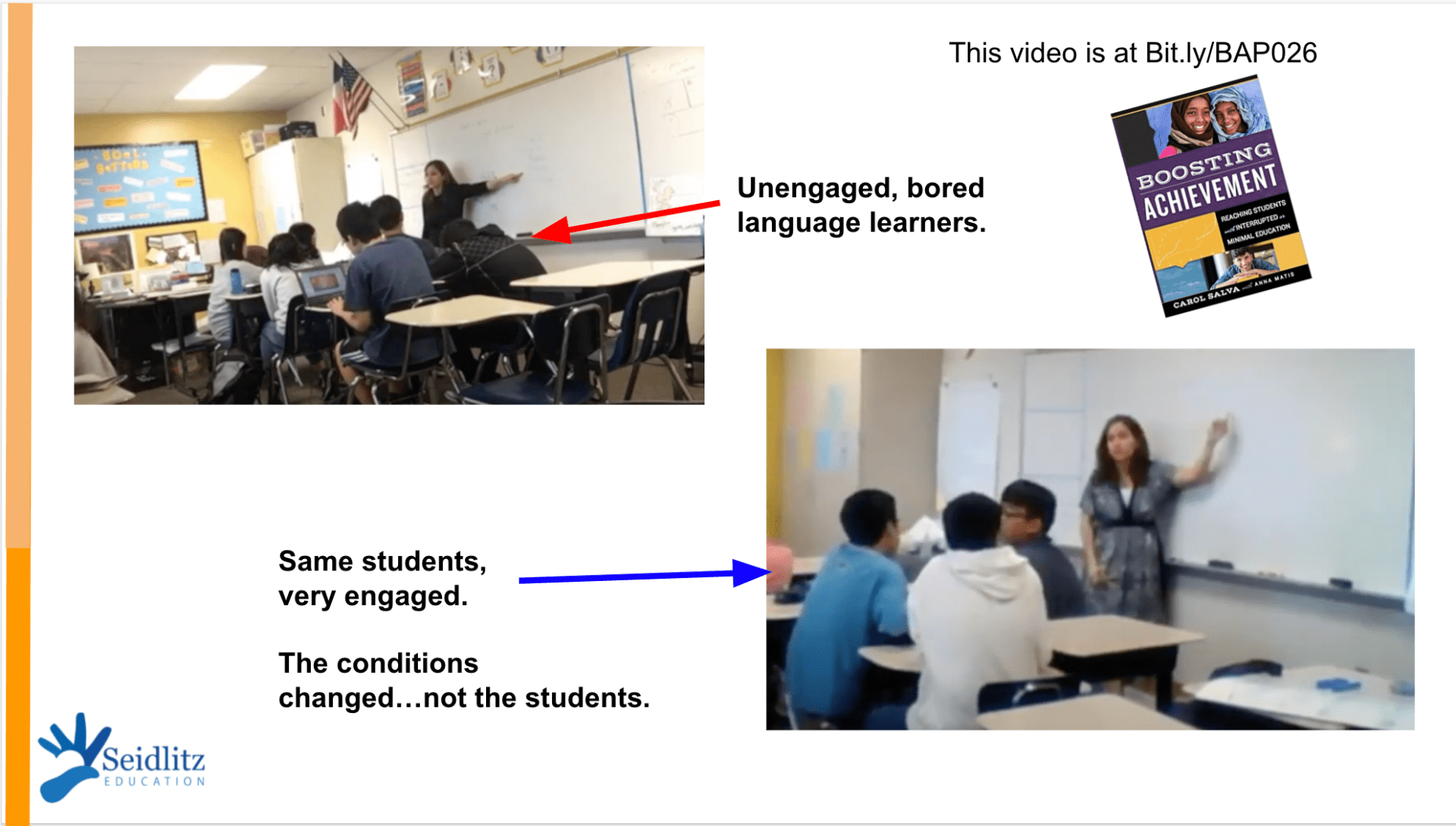
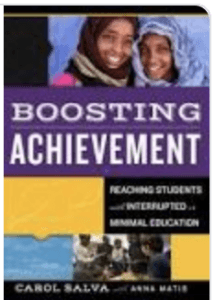
So here’s what I’ve learned. I have to keep challenging my mindset. I have to keep challenging it. I used to work with a man named Joseph Mauer. And if you have our Boosting Achievement book, youll see that we cite Joseph Mauer throughout the book. He’s an amazing educator. He’s a master teacher. I would go and sit in the back of his classroom because he taught in a low socioeconomic area, but he had some of the best scores in our district. And we have some pretty wealthy schools in our district. But, no matter what, his scores were always at the top. So we would go watch him. Josephnwas the one that told me about Capturing Kids Hearts. He was the one that showed me how to annotate the objectives. He had been through Seven Steps training, and he was implementing a lot of Seidlitz’s Seven Steps. So I leaned on him a lot when I went back in the classroom.  I was struggling because I was falling into default teaching. You know, it’s when you know better, but you fall into default because it’s stressful and you just go back to your default. So Joseph came and watched me teach when I had a whole group of newcomers. I hadn’t been in the classroom in a really long time. And they were all SLIFE kids. They were students with interrupted or limited formal education. And I was just having a really hard time getting a handle on it. One of the things Joseph told me was, you have to challenge what you believe. Where’s your “I don’t know” poster? I was like, “I can’t read that, but they can’t.” They couldn’t read it yet. I was like, “What good is that going to do???” And then he’s like, Okay, where’s your Social Contract? You need to do a social contract.”  Me: “They’ve never been in school. How are they going to create the norms??”

It was such a good conversation with him because he was just brutally honest with me that I had my bar too low. And I thought, what is too low when no one in here can read in English, and most of them can’t read in their native language?  And they’re in middle school!  They don’t know how to do school. They’ve never been in school…   So you know, there were all these things that they couldn’t do, and he was just not hearing me! “You don’t understand. They can’t do this, they can’t do that.”  But he reminded of what we all say we believe. We believe that kids can learn quickly in the right environment. Kids can learn very quickly. And he knew that I believed that this was a lack of opportunity.  Which is what was going on, right? Kids had not had the opportunity to learn this language enough or to learn to read, or to learn to read even in their own language.

They just hadn’t had the opportunity.

So I never forgot that. You have to challenge your beliefs. If you believe that they can learn quickly, then I need to stop focusing ONLY on what they cannot do. I need to know what they can’t do. I need to figure out along the way what they can and can’t do. But I need to keep putting the bar higher than what they can do because I’m there. We can do a shared reading. We can make that poster and read it together. I can track the print with my fingers, and the kindergarten teachers told me they’re going to use it to learn to read. That’s going to be a big part of their road to literacy because you’re giving them multiple exposures to little high-frequency words every time you read that poster, and it’s meaningful.  There are so many things wrapped up in some of the basic things that we need to remember to do. But it starts with what do you believe? What do you believe? Do you really believe every child can learn quickly? Or do I believe that every child except these kids?

What do you believe? Do you really believe every child can learn quickly? Or do I believe that every child except these kids?

And let me tell you, if you followed me for a while, or if you did buy the Boosting Achievement book, and you read the introduction, you know that the class I’m talking about.  They were fighting and climbing over desks, and it just seemed like there was no way. People were telling me they were unteachable.  But that had more to do with the environment than the child. By the time I came in and was asked to take over, they had spent months frustrated because they didn’t speak each other’s languages. And this was way before the pandemic when we started focusing on SEL. It didn’t occur to me. I felt like a brand new teacher all over again. And so I was in a high-stress place. It’s humbling to go back into the classroom. I say that all the time. I just want to lift you up if you are the one actually teaching because we think as instructional coaches that we remember. You can’t remember. There’s no way unless you’re the one actually doing it. And so I just want to lift you up and honor the fact that it can be a stressful thing because you want to do the best for your students. And their demographics keep changing and challenges keep coming at us.   So when Joseph came in to watch me teach he said things like “… but you know better than this. I mean, you know this, you taught this, you’ve trained this.”  That was true but I was in a high-stress place at the time, and we know that people don’t learn well and don’t function well in a very high-stress place.

Reflection

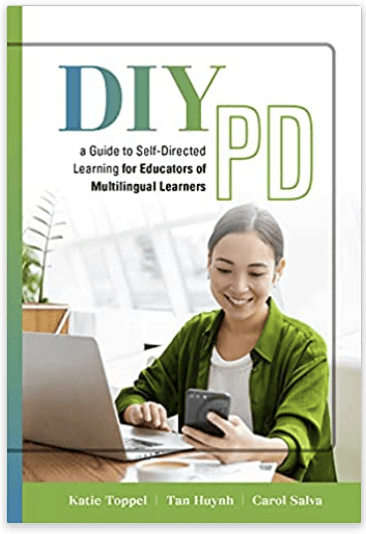
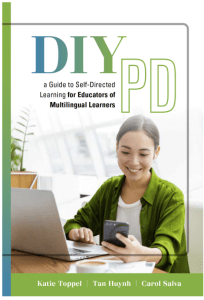
So we found the answer in reflection. So what I would do is film myself. This was Joseph’s suggestion. I was also leaning on my instructional coach in the building, and he told me the same thing. You could film yourself, and you don’t need to share it with anyone. It’s for you. There are other ways to reflect, too. I found Twitter. I could reflect every day for 15 minutes.  Go to the hashtag #SLIFE (for students with limited or interrupted formal education) or whatever it is that you teach. You can find people out there who are sharing and will help you reflect. I could listen to a podcast like this while I’m doing the laundry. I’m having an opportunity to reflect. Dr. Katie Topple and Tan Huynh and I wrote a book called DIY PD for Educators of Multilingual Learners. The entire thing is about how to personalize your learning on your own. When you want to in tiny snippets or in long chunks, whatever you want to do. You can take your professional learning to the next level. Even if you’re the master, there’s room to grow, and we have to personalize our learning for that. We’re pretty proud of the book and teachers are having so much fun in the #DIYpd4MLs trainings we do in districts.

So I was doing a lot of DIY PD by just watching my own video. It’s called micro-teaching.  I was also blogging. No one was reading my blog! It was a single-reader blog… me. But it was a place for me to reflect when I had a chance to write down what went well, and what didn’t.

Then it was really helpful when I just humbled myself.  I told the kids, I’m trying to learn how to best teach you. Can you help me?

Let’s learn together.

Phew!! It got better. It got way better. I need to do a Where are they now? show.

The Messages we Give Them

When they told me what they wanted to be,  my shoulders dropped, and I’m like, well, let me give you something a little more realistic.  🙁

Okay, now I was the problem. Who am I to say that they can’t be that?  They can. They just need to not give up. Even if you’re in high school and you can’t read right now, how much time do we all have? Whose timeline are we on? Of course we want to give them tons of options. I was really glad someone showed me things that I didn’t need a four-year degree to do, because I didn’t have the money, I didn’t have the means to go to a four-year college, and I didn’t have a good academic record either. But you just take the next step forward. You just take the next step forward. And we have so many things to support these students. Point them in the right direction and raise the bar and just tell them what they’re going to need to do.

Point them in the right direction, raise the bar and just tell them what they’re going to need to do.

But you know what? Let’s talk about what we need to do right now so that you have the best shot. Whether you have six months left and you’re going to age out, or whether you have the rest of middle school and high school, or whether you’re behind and you’re in second grade, you get to keep the learning. Whatever we learn this year, you will take with you on your next step. So you’re not starting from zero, ever. Just don’t give up.

My Research

I just finished my dissertation on what helps SLIFE persist through to graduation despite challenges.

It is going to be published soon.  Register here if you’d like to be notified when it is available on ProQuest.

I couldn’t work with any of those students that I’d ever taught. I had to find new students that had interruptions in education, that had entered US schools in high school, anywhere from two to ten years. They had missed of schooling. Some had been to newcomer centers, some had not. Some went into regular high schools.

We looked for themes as to why they did not drop out. It was a qualitative study. So we did interviews. And in today’s show notes, I’m going to put a Google form if you would like the entire dissertation because it’s about to be uploaded and we will send out a reminder if you would like it to be on this list. So we interviewed unfortunately, it’s hard to find students with limited education that don’t drop out. The research shows that they’re dropping out at a higher rate than students who are new to the country, that our average English learners are multilingual learners. That dropout rate is higher than the average student. But this demographic’s life is even higher and growing even faster. So it’s important to know what we are doing in our communities as faculties in regular schools and what families are doing to support or to make it harder. So we did interviews and we looked for themes in those areas.

And every area had pros and cons. Every area had family supports. What made it easier and what made it harder. And it wasn’t that some students didn’t have any family support, but they had strong support in one of the other areas. But I just want to talk about faculty. The two biggest themes for adults in the building… that made them want to stay in school:

Degree of Esteem that we held them in

Kindness and Patience.

Kindness and patience. I know you know what that means. And the way we talk to them in our body language and when we think they can’t understand us, they get it. They get whether you’re being kind and patient or not. And it makes a big impact, 100% of them said, on whether they want to stay in school or not. And let me just explain quickly if you don’t know what I mean by degree of esteem.

Degree of esteem means how do we view them? Do we view them in high regard or do we view them in low regard and pity them? Or feel like they can’t do what they feel it. So if you think of the word esteem, your self-esteem is how you feel about yourself.

High self esteem means that I feel very confident, Low self-esteem = I feel not confident and not good about myself. So degree of esteem is the level of esteem that you hold me in, do you hold me in high regard? Do you hold me in high esteem? Do you make me a leader in the class? Do you set up wins so that I can start to contribute more because, you know, my voice is important? Or do you say things and do things that give me the impression that you feel sorry for me and you don’t think that I can contribute much?

I’m going to give you just one example of what one student said. He had missed many years of school, and there was an adult in the building, and it was not even a teacher, but she asked him, what do you want to be? What did you say you wanted to be? And he said kind of sheepishly because he didn’t know if it was realistic. He said he wanted to be a pilot. And she responded, “I can see you in the air. I see it. I see you in the plane. I see you in the air..”

His words were “….  little words like that. I don’t think they [teachers] understand how important that is to the student.”

It’s a pretty emotional study to me. You know, I would think to anybody that teaches, right? That’s what we got into it for. But as an educator, you deserve some practical things. You deserve some things where you’re not killing yourself and staying up late at night and making special things.  For this demographic, we’re finding that’s not what you have to do to keep them in school. They said tutorials and summer school were the biggest things for systems. Those are the biggest things. And not special tutorials or special summer school. Just understand that every day I know more English and every day I learn more and I can read more.

And I might fail algebra again this year, but I’m moving forward. I’m going to come to tutorials, and I’m going to keep learning more algebra and more English. They said tutorials help them work in smaller groups and with different teachers, and summer school gave them an opportunity to focus on just one content area at a time or two for the whole summer. So these are things we already have in place.

I don’t mean to make all of this sound easier than it is, but I do feel like we’re making it harder than it needs to be for me.

Mindset. Challenge my beliefs.

Challenge what I believe, just like Joseph told me. What do you believe, though? What do you really believe? Do you believe kids can learn? Do you believe if they don’t give up, that there’s nothing that would be able to stop them over time.  Do you believe that kids beat the odds? Some kids beat the odds. OK, why not? That beat all the kids in your class if the determining factor of why they can beat the odds or how they feel about themselves and what’s available to them. So I’m going to end on this because I just think we just need to take this with us.

I need this so much because our world continues to change and our jobs all become more and more challenging and we just need to settle and think about what can we control and what can we not control and what are the things that are practical that we can do that have the biggest impact and how can we form relationships with students where we flip that script. Where we flip it and go. I know it’s hard. I’m going to do what I can to make it easier for you and understand that every day it gets easier. Every single day, just like going to the gym and working out, it’s hard, but you’re getting stronger and it becomes easier.  So just come with us. Just come with us. Okay, so here’s what I want to end on, okay? I really want to end on something that happened in that classroom back then that really makes me think now I try to hold on to it now.

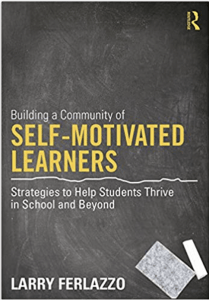
So the class was full of language learners that had limited formal education. And they were in secondary, they were in middle school, the class I’m talking about. And it just seemed like an uphill battle. And I consulted with someone who is a leader in the field and I was asking what I could expect, like what’s the best scenario, best case scenario? And so they told me what the research shows. It’s going to take five to seven years just to learn a language and then literacy on top of that.  And they don’t have good outcomes for this kind of student. And XYZ and I said, yeah, but they’re learning, I mean, faster than I would have imagined because by now we had an environment that was so supportive and everybody felt like they were learning and everybody was motivated. Right? We’re fast forwarding to the second semester.  This person told me, okay, well, you might have one like that, but that’s an anomaly. That’s not normal. That’s not what’s generally happening in classrooms. Okay, but it’s not one. Okay, well if you have a few, they’re anomalies.That’s not the norm. Carol. I was like, okay, but everybody is learning faster now that we’ve been focusing on motivation and what like Larry Ferlazzo writes about how to help kids find their own motivation. We’re focusing on that and we’re making sure things are relevant to them. And that’s a big focus.

…everybody is learning faster now that we’ve been focusing on motivation

A lot of shared reading, shared writing, and relevant topics. They’re with some teachers and content classes that are holding a high bar, and they have them I mean, they had just optimal situations all over the place, and they’re all learning so fast. And she said, well, yeah, because it’s the environment that’s the anomaly. It’s the environment that’s not normal. So they’re all going to learn more quickly.

BE THE ANOMALY

When you look at research, that’s what I want us to think about here. When you look at research that the average kid like this goes blah, blah, blah and takes this long and all of that, we need to ask ourselves why.  Why is this so?  What is the average classroom look like?  What is the average student with interrupted education having an opportunity to do? What’s the support look like?

Take it all into consideration before you say, okay, well, there’s no hope for this kid.

Make sure your environment this year is the anomaly.

Make sure your environment is what makes the difference.

You can do it!

All right, so that’s the Back to School episode of 2022!

But whenever you’re reading this, the principles throughout this episode should apply. You can take those five things that I talked about at the beginning, and you can implement those at any time in the school year. The biggest thing I wanted to talk about that applies anytime of the year is our mindset, my mindset, challenging my beliefs.

That made the biggest difference for me. And that goes a long way to helping the mindset of the students that we serve.

Where can we connect?

Come to Texas! 🤠

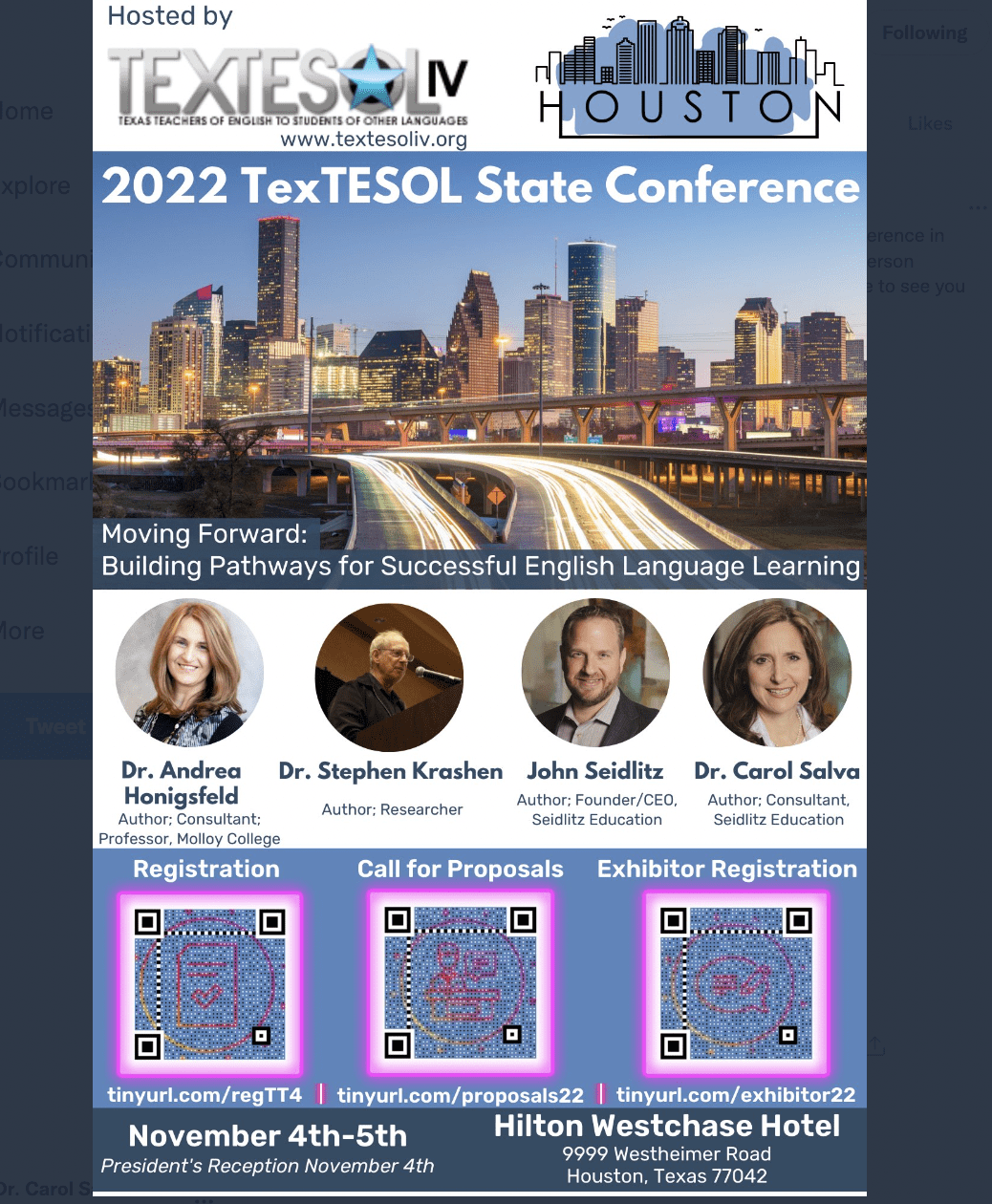
Come to Houston if you’re listening to this real-time in 2022, in November, we have TEXTESOL!  Our local TexTESOL IV chapter is hosting!
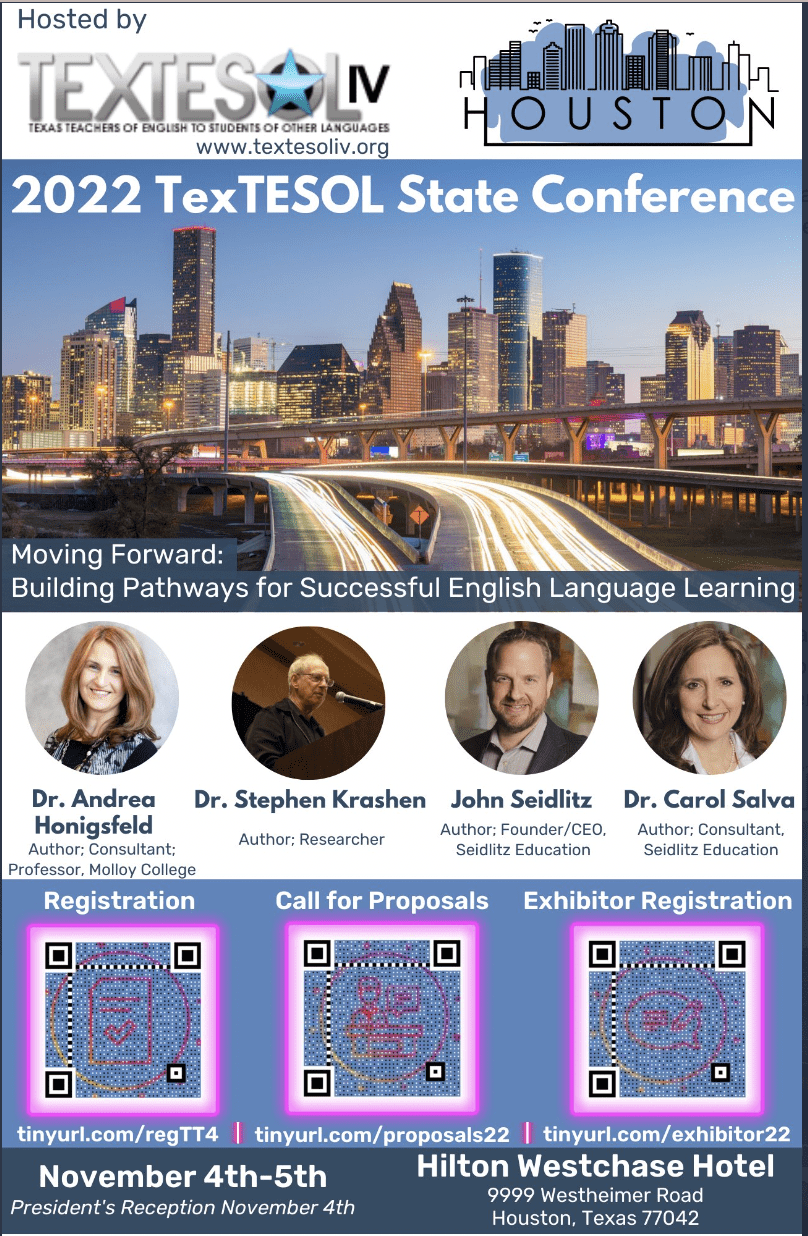
That flyer is for our state conference, and I’m honored to be a keynote speaker with Dr. Steven Krashen, Dr. Andrea Honigsfeld, and THE John Seidlitz. We’d love to have you here with us.

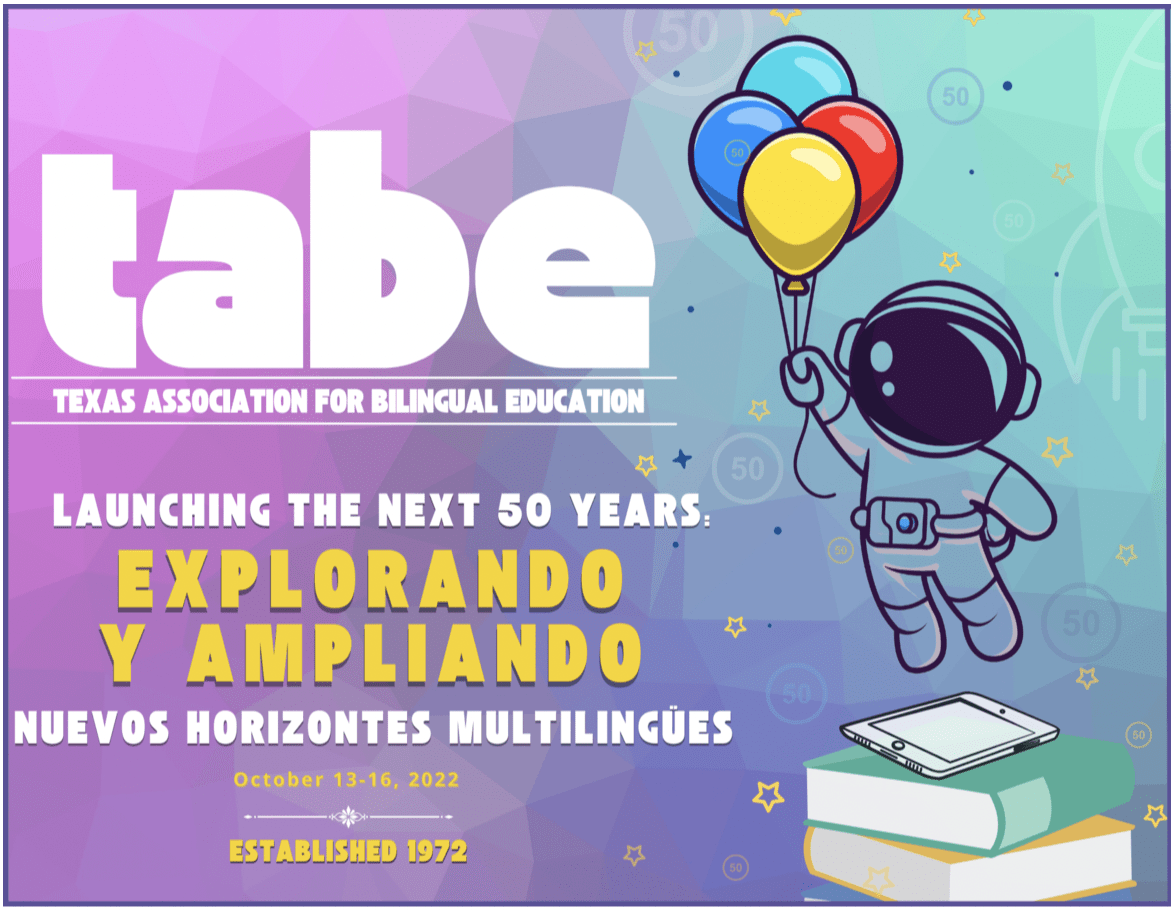
Also, you could come to TABE! That is the Texas Association of Bilingual Educators and the annual conference is here in Houston in mid-October.

I am giving a full-day preconference on Rapid Literacy for Older Emergent Readers.  More to come on that:  https://tabe.org/
We would love to see you there. I’ll end this podcast, just telling you. Thank you. If you’re still listening to a podcast, again, you’re the type of educator I’d love my own child to have, and I appreciate you, and I hold you in very high esteem, in very high regard.


Please reach out if I can help you.

Take good care.

❤️, Carol


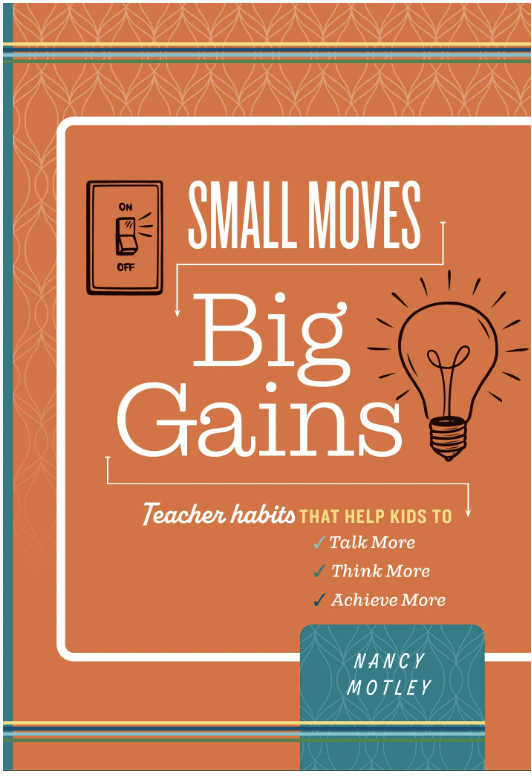
BAP109 Small Moves, Big Gaines with Author Nancy Motley

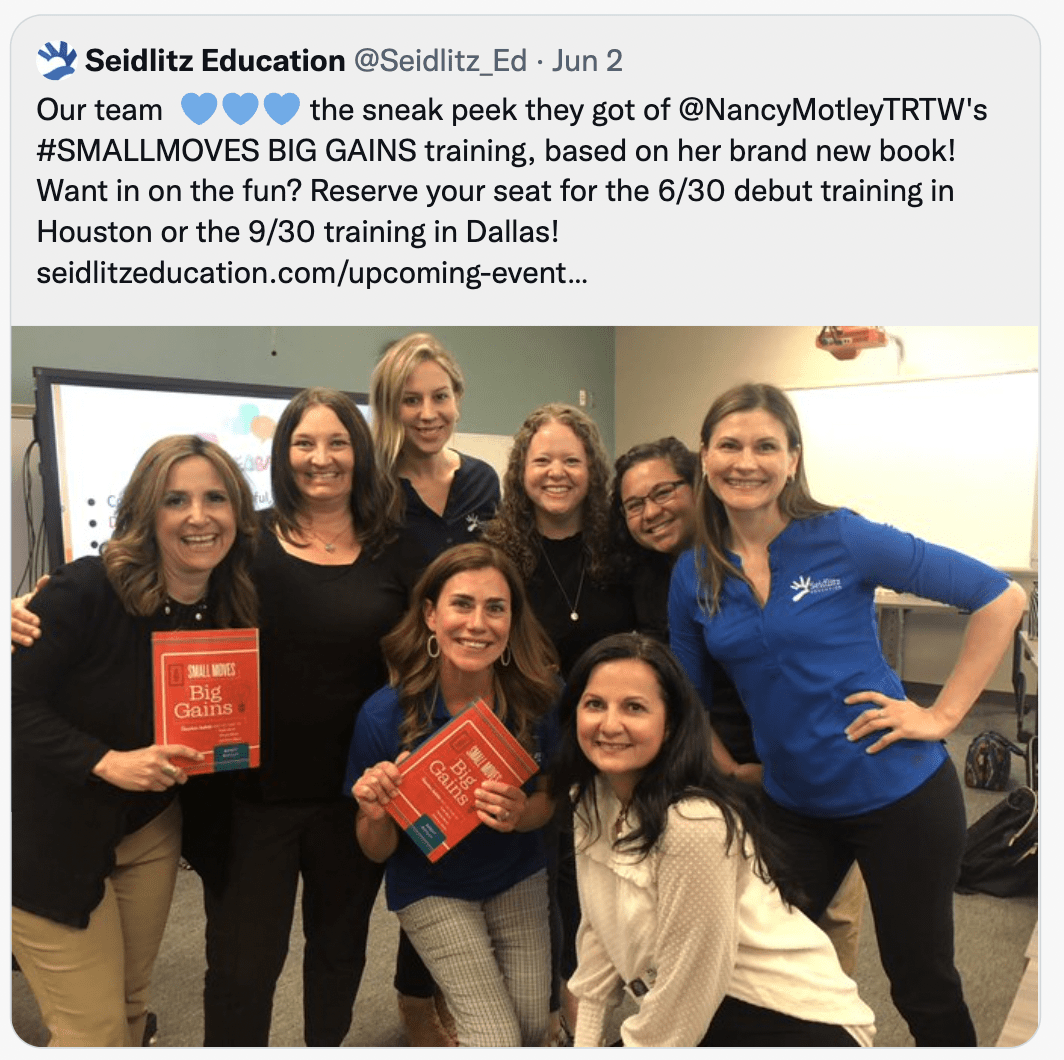
Our guest on the show today is the amazing Nancy Motley. Nancy is a former educator who has held many roles in education from elementary through high school.  She is now a Senior Consultant with Seidlitz Education where her role has her delivering powerful and relevant professional learning. She also supports teachers in their environments with coaching and mentoring.  Nancy is with us today because another part of her role is to write and develop new products.  Her newest book, Small Moves, Big Gains is now available and she is here to share tips from it.
Make sure to tune in because she shares some of the content from the book for free in this interview.

You can listen to the show on your favorite podcast app or right here:
Listen to “BAP109 Small Moves, Big Gains with Author Nancy Motley” on Spreaker.

Or you may prefer to watch the show on YouTube or right here:

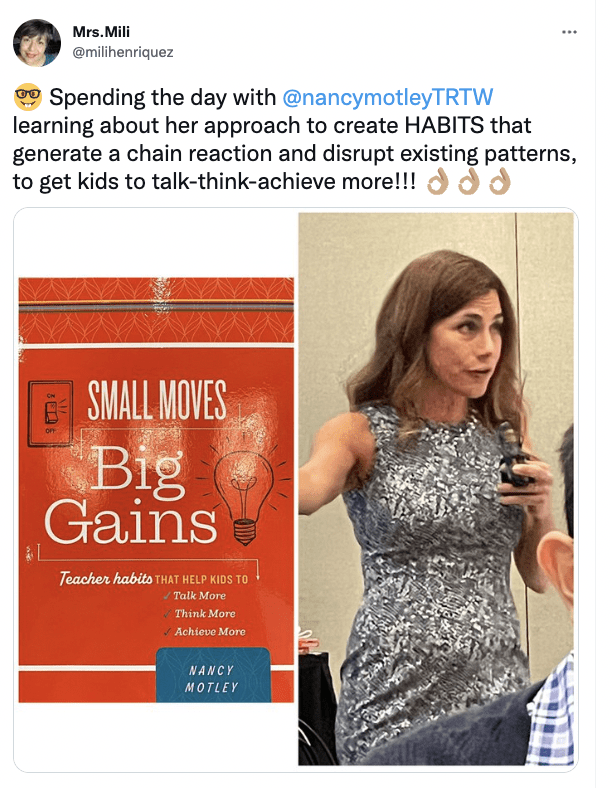
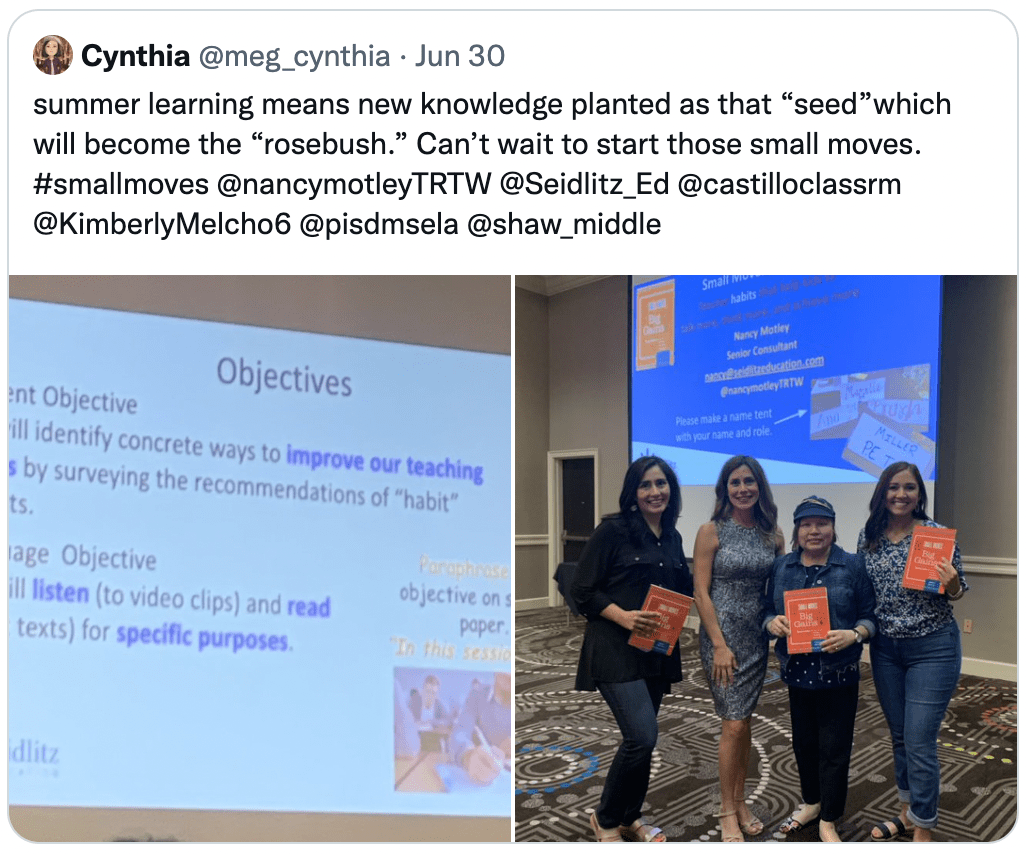
There has never been a better time for a resource like this.  I was fortunate enough to attend an all-day conference with Nancy where she shared many of the easy-to-implement strategies along with the research and specific steps to cultivating these into habits. Everyone loved how “do-able” the strategies are.  Not only are they things we can actually manage to do easily,  they also offer big gains in terms of getting kids to talk more, think more, and achieve more. (hence the subtitle of the book!)

What are Small Moves?

In the show, Nancy talks about what she has learned in her many years as an instructional coach.  Like many of you, I am a  lifelong learner and I always want to improve my craft.  But Nancy makes some great points about why we might have difficulty making big changes.  There is a lot on a teacher’s plate, there are things that are not in our control, and so on.  This is exactly why this resource is so powerful.  Nancy highlights the research of habit-formation and suggests that we work on building small habits that lead to big gains.

She shares two specific small moves in the show that we can use right away.

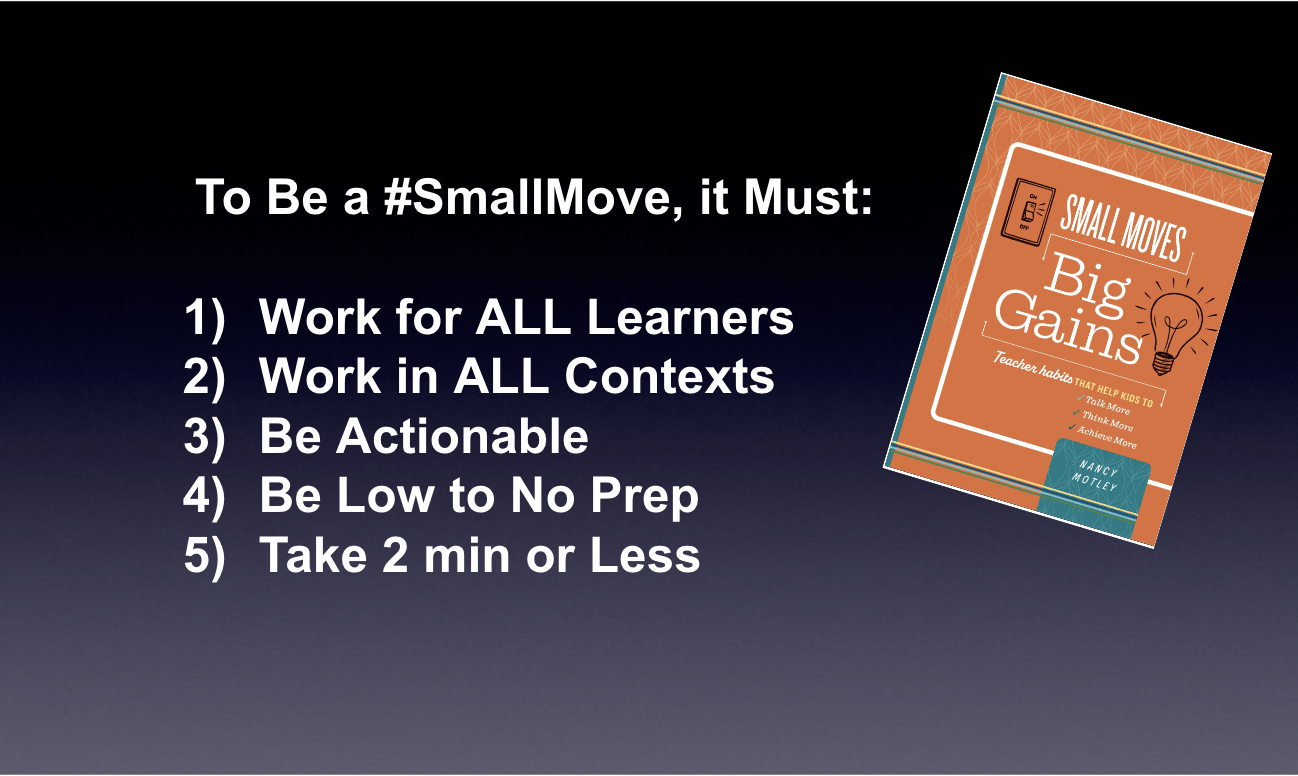
Nancy also shares her criteria for one of these “small moves.”  For a move to make it into the book, it must be:

  1. Work for ALL learners (MLL, Gifted, Bored, Over-Achiever, etc..)
  2. Work in ALL contexts (PreK-Calculus and all content areas)
  3. Actionable
  4. Requires little to no prep
  5. Able to be implemented in 2 min or less

The show really offers some great insight into how changing a few habits can have a profound effect on our pedagogy.  It is easy to see that once we are doing some things with automaticity, it would be easier to take things to the next level with more habits.

She even shares a few ways to make habits stick when you are cultivating them.

My Take-Aways

I had so many learning moments in this conversation.  One of my biggest takeaways is that I need to focus on what I am already doing and think about how I can stack a habit on top of that.  The more I use this resource, the more I can see just how much I am over-complicating things.  I am definitely making some things harder than they need to be. Since this interview, I have tried a few small moves that she suggested in my professional learning workshops and I am super happy with the results.  It is really bringing me so much clarity on how to continue to improve.  I’m excited about trying more small moves now that I’m thinking differently about my habits.

Where can you get your copy?

You can get your copy of Small Moves, Big Gains on Amazon or on the Seidlitz Education website. 

Just check out the hashtag #SmallMoves to see a lot of buzz about this resource!  Like she says in the show, we absolutely need drastic change and major shifts sometimes.  But she is right, there are “no drastic shifts that happen outside of small deliberative moves toward that goal.”  So the greatest gift we can give to teachers is a do-able way to automate some moves that get us to a place of big gains.

Learn with Nancy

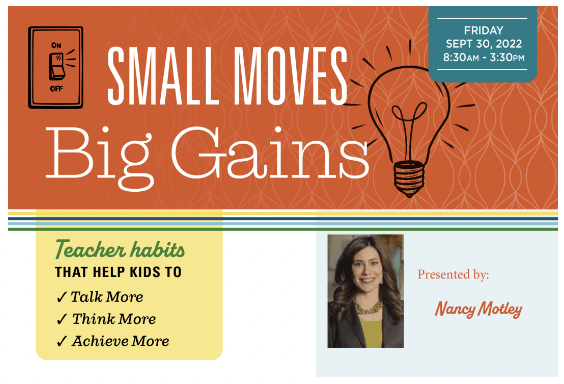
If you are able to learn with Nancy in Dallas, Texas on Sept. 30, 2022, be sure to sign up for that open workshop.   You get to spend the whole day learning from Nancy and a copy of the book is included in the registration.  The link to get more information and register is right here.

You can also reach out to Nancy to bring her to your district.  Many education leaders are booking the “Small Moves, Big Gains Training” where Nancy comes to your district in person or virtually to train teachers on the concept and the moves.  I highly recommend this for any district.  It is exactly what teachers need right now.

You can reach out to her at Nancy@SeidlitzEducation.com

You can also follow her on Twitter here:  @NancyMotleyTRTW


At the end of the show, I also mention where we can connect in the near future.

Fall 2022 brings these two opportunities that are open to anyone.  I will be a keynote at the TEXTESOL conference this year along with Dr. Andrea Honigsfeld, John Seidlitz, and Dr. Stephen Krashen.

I also have a full-day pre-conference on Rapid Literacy for Older Emergent Readers on Oct 13th, just prior to the TABE conference.  Both are in Houston Texas.

Or feel free to reach out to me if you’d like to bring newcomer training to your district.  You can email me at Carol@SeidlitzEducation.com or find me on Twitter or Facebook. 

Thank you for listening to this show.  I am excited to share ANOTHER place you can learn from Nancy.  She is one of the featured speakers for this year’s ML Summit happening on July 9th.  Even if you hear this show after the 9th, that talk will still be available on this website:  MLSummit.net

So another big thanks to Nancy for all she shares with us!

And as always, a BIG thanks to YOU for doing this self-directed learning today.

I’m sending you positive vibes.

Take good care,

<3, Carol

BAP108 QSSSA Resources ft. Chris Hagy

In this episode, Chris Hagy joins me to explain a strategy and also to talk about how his district is supporting teachers to support their Multilingual Learners.

Christopher Hagy is the Assistant Director for Multilingual Learners in Charleston County School District in Charleston, South Carolina.

You can watch, listen or read about this content.

To listen, just go to your favorite podcast app or listen right here:

Listen to “BAP108 QSSSA Resources ft Chris Hagy” on Spreaker.

The show can be watched on YouTube or right here:

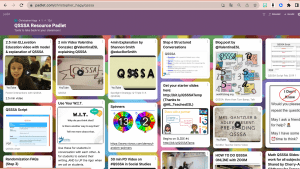
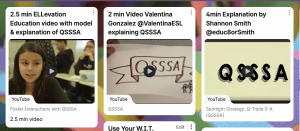
The links we mention are all below. I’m excited to share Christopher’s padlet which contains some of our favorite resources around the QSSSA strategy.  He offers the padlet for anyone who would like to use it or share it with their staff.  The padlet address is: padlet.com/christopher_hagy/qsssa

We begin the show by explaining the QSSSA strategy.  Chris’s educators in Charleston are being directed to this show and this padlet to learn more about the QSSSA technique that was first introduced to us by John Seidlitz and Bill Perryman in their 7 Steps to a Language-Rich, Interactive classroom. So here is an overview:

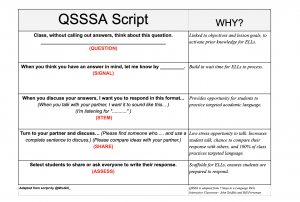
QSSSA

  • Question – Ask a question based on a key concept.
  • Signal – Offer a way for students to indicate readiness
  • Stem – Offer the sentence stem or sentence starter to answer the question.
  • Share – Turn and talk / Share with a partner.
  • Assess – Get a formative assessment by randomly calling on someone or having students write something.

The technique has been very popular for over a decade because educators recognize that it helps overcome some of the common challenges we face when trying to faciliate an effective “turn and talk.”

To make things as easy as possible for his teachers, Chris is offering them a padlet with several different resources to learn about this strategy. For example, we discuss some of the 2 to 4-minute videos that explain the technique and show teachers using it in class.

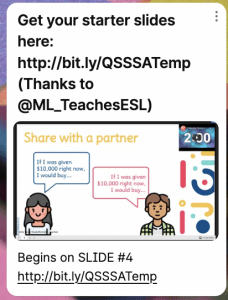
We also point out that you can copy a slide deck by Molly Lang that serves as a “starter-pack” for facilitating a conversation this way.

And we also describe a very effective script created by Michelle Gill from Abbotsford, Canada.

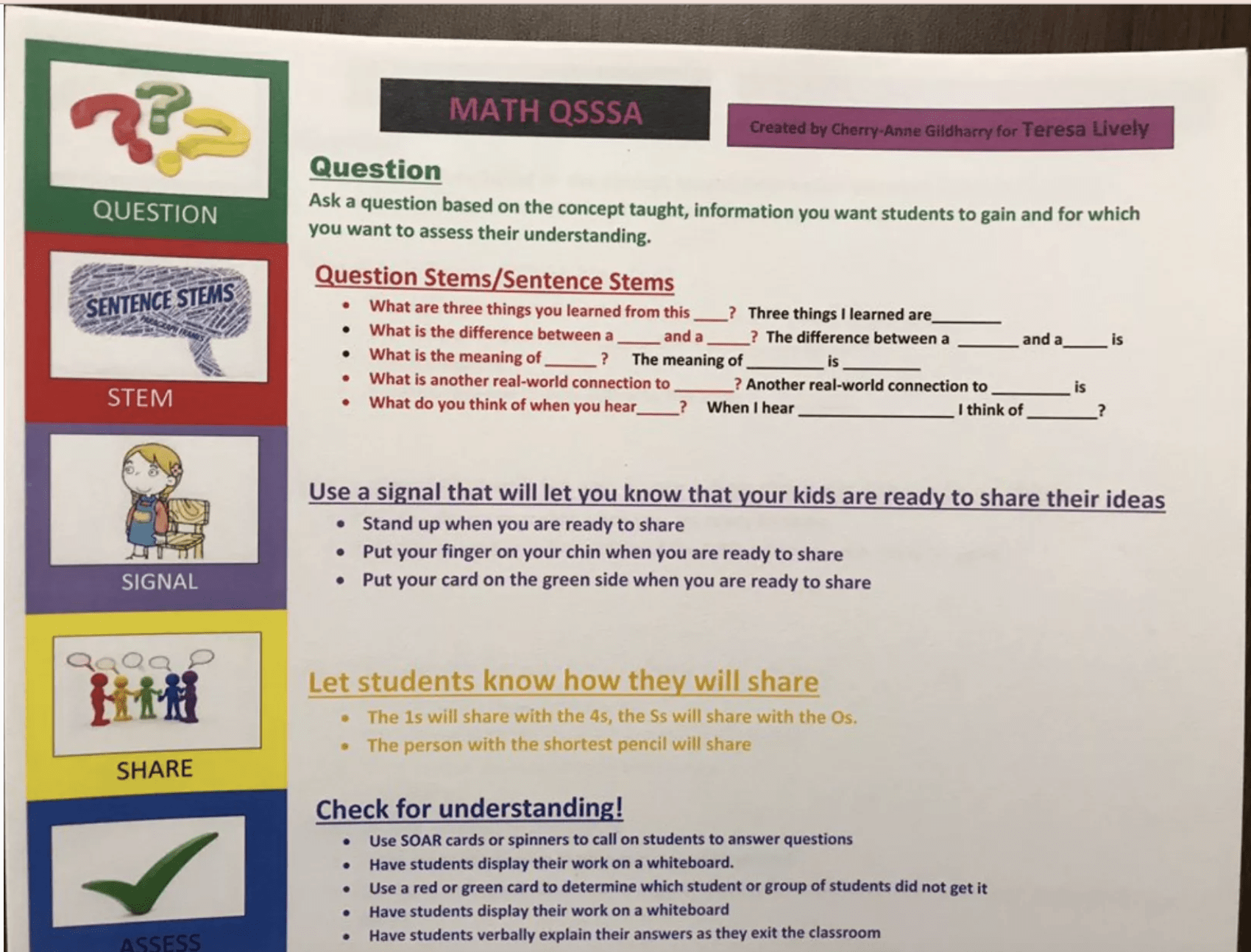
Another great resource we pointed out was created by Cherry-Ann Gildharry for her math teachers.  It has several stems that make sense for any content area.

Chris explains that all of these resources are in one place because he recognizes that educators are busy.  They may not have time to take 5 graduate classes to get an ESOL endorsement.  He explains that he is happy that teachers have that option and that Charleston County School District supports them to do that.  But he is also glad that they offer other options like book studies and 1-hour webinars.  This padlet that we are explaining today is just one of multiple entry points that Charleston County SD is offering to their teachers.

I applaud Chris for taking an innovative approach to professional learning.  He is offering CCSD teachers different options for how they can personalize their learning journey.

In fact, earlier this year Charleston Co SD and Berkely Co SD teamed up to bring me for a day of learning with all of their ESOL teachers.  I brought the DIYpd4MLs training to their teachers to help them see all that is available to take your professional learning to the next level.  Tan Huynh, Dr. Katie Toppel, and I wrote the DIYpd book so that educators of Multilingual Learners could see multiple entry points for their self-directed learning. And we offer a workshop to teachers see how easy it is to get bite-sized, powerful professional learning.  I am inspired that these two districts would empower their teachers with it.

Big thanks to Christopher Hagy for coming on the show and for all he is doing for the field.

We wrapped up the conversation by talking about the fact that language acquisition strategies are not ‘one more thing’ as some teachers may fear.  What we know is that many of the strategies that are necessary for multilingual learners to succeed are strategies that boost the learning of the entire class.  A strategy like structured conversations results in higher achievement for the average learner.  It is good, Tier One instruction.

That is it for this episode! Please reach out to let me know what you think of the show or if you have any suggestions.  Chris also offers this email address if you have questions for him: christopher_hagy@charleston.k12.sc.us.

Thank you for stopping by this blog!

Please take good care,

Carol

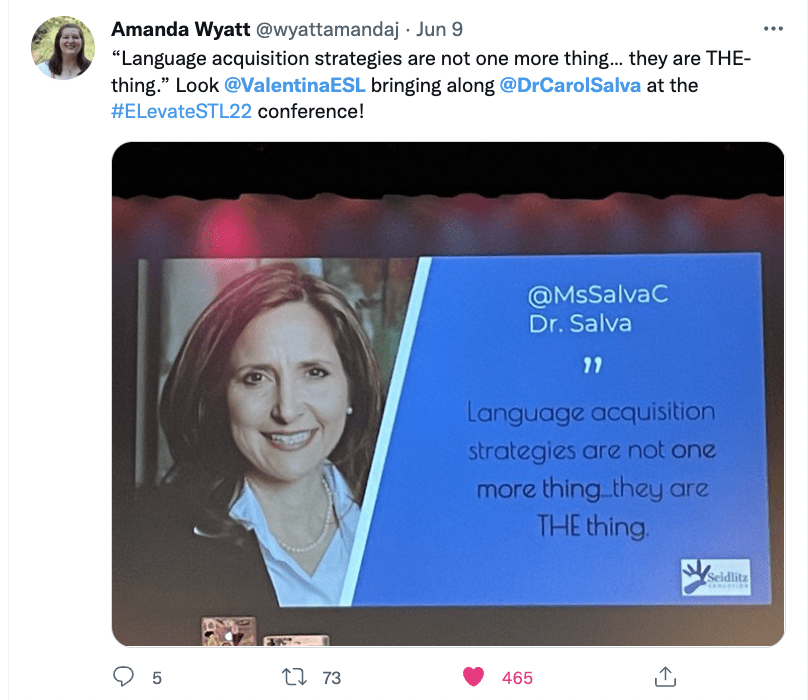
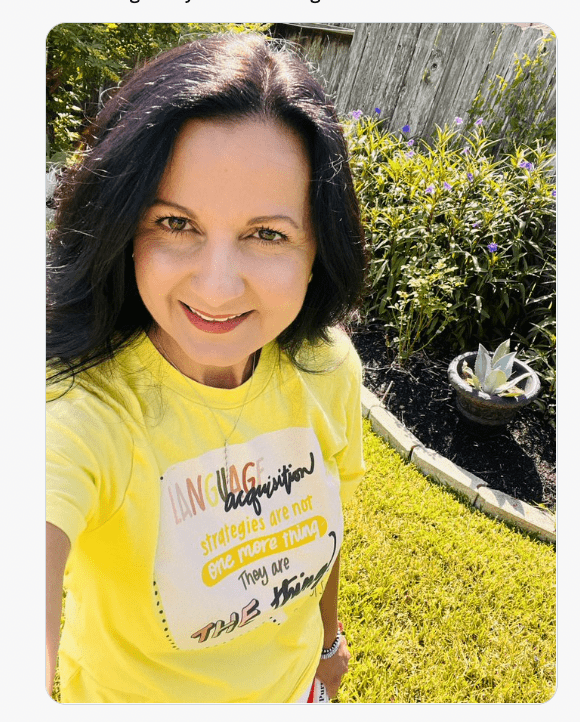
“Language acquisition strategies are not one more thing.  They are THE thing.”


PS:  I mentioned the TexTESOL conference and the TABE conference this fall.  As soon as I have links for these events I will post them here and also send them out to subscribers of this blog.

BAP107 ESL/ELL Ferlazzo and Sypnieski on ESL ELL Teacher’s Survival Guide

Are you interested in really amazing free resources??  You’ve come to the right place. Larry Ferlazzo and Katie Hull Sypnieski join me on this show to discuss their new book, ESL/EL Teacher’s Survival Guide, 2nd Edition.  And there are a ton of free resources and learning opportunities available around it.

You can listen to the audio on your favorite podcast app or right here:

Listen to “BAP107 ESL/ELL Survival Guide ft. Ferlazzo and Sypnieski” on Spreaker.

You can watch the YouTube version of this interview here:

Or you can just browse through the notes to get a gist of what we discussed.  My learning reflections from the conversation are at the end of this post.

Larry & Katie’s bios are extensive.  They do much more than this, but here are the bios from the back of this new book:

Larry Ferlazzo teaches English Language Learners and English-proficiency students at Luther Burbank High School in Sacramento, California. He is the author or editor of 12 books on education and writes a weekly teacher advice column for Education Week.  (Top Tip: Subscribe to his blog here.)

Katie Hull Sypnieski teaches English Language Learners and English proficiency students at Arthur A. Benjamin Health Professions High School in Sacramento California. She is a Teacher Consultant with the Area 3 Writing Project at the University of California, Davis, and is a co-author of the ELL Teachers Toolbox and Navigating the Common Core with English Language Learners

As you’ll hear in the interview, there are several contributors that wrote new content in this new edition.  Larry and Katie dedicate a few pages of the book to our bios but you can click on these links to follow them and learn more about them right now:

Laura Gibbs

Stephen Fleenor

Cindy Garcia

Valentina Gonzalez

Antoinette Perez

Jessica Bell

Tan Huynh

Carol Salva

Jenny Vo

In the interview, we get a chance to hear about how different this edition is from the first ESL/ELL Survival Guide that was published 10 years ago. It still includes how to get started, teaching beginners, teaching intermediate multilingual learners, curriculum, daily instruction for MLs, and more.

The new version has a lot of new content around things like:

ELs with Learning Differences, Adult ELLs, Long Term ELs, ELs in Mainstream Classes, Social Studies for ELs, Math for ELs, Science for ELs, Culturally Sustaining Practices, Home Language of ELLs, Using Learning Games, Assessing ELLs, Reflective Teaching/Professional Development, Additional Opportunities, Common Challenges and more.

How you can plug in right now

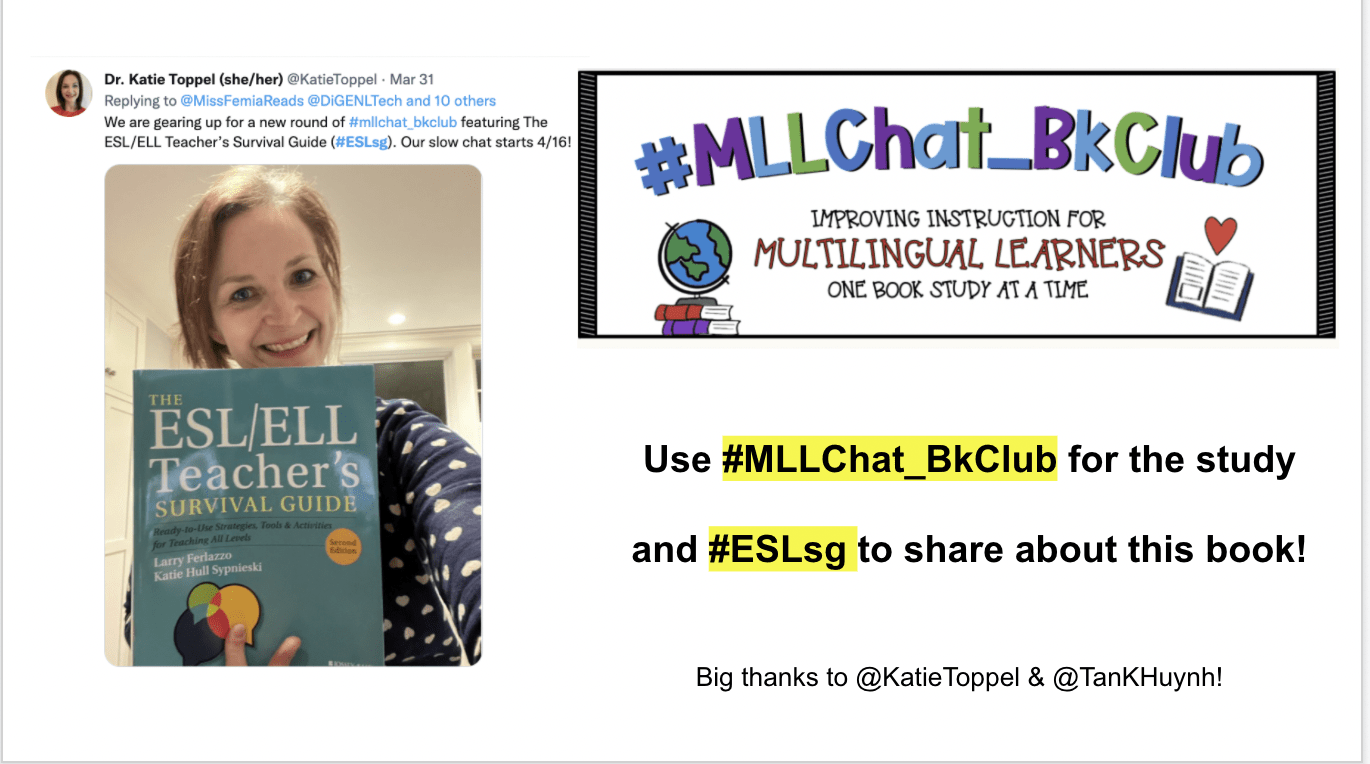
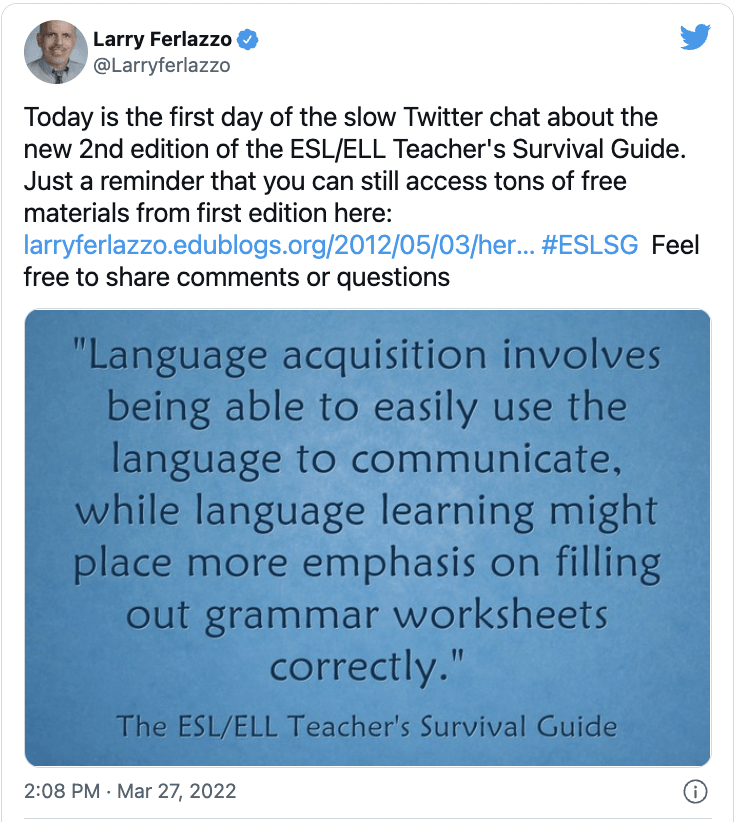
I wanted to publish this interview ASAP because thanks to Dr. Katie Toppel, we are about to start a month-long #MLLchat_BkClub book study on this resource and you can plug in right away! Now sure how? Larry published an “Everything You Wanted to Know about The Month-Long Online Book Chat about our New Book But Were Afraid to Ask” post.

My strong recommendation is whatever you do, follow the buzz around the hashtag:  #ESLgs

There are many folks sharing about this book, so you can catch a lot of the learning just by following that hashtag.  You might also get a lot of the learning from the excerpts that Larry & Katie published in a slow chat recently. 

OH! And check out these free downloadable student handouts and free chapter downloads from the book!

The first book was a true survival guide for me and I am so excited to be part of this new version.  Along with several other contributors, I had the honor of writing one of the new chapters in this new version!  I’m so happy to share some thoughts on being reflective about our teaching and how powerful that can be for our own professional growth.

Many thanks to Larry & Katie for spending time talking through it all with me.

My reflections from this show:

I often recommend that people follow Larry and Katie because they are still in the classroom and they are very generous in what they share for our collective growth.  There is no question that they are at the top of their game with classroom instruction, research, and best practices.

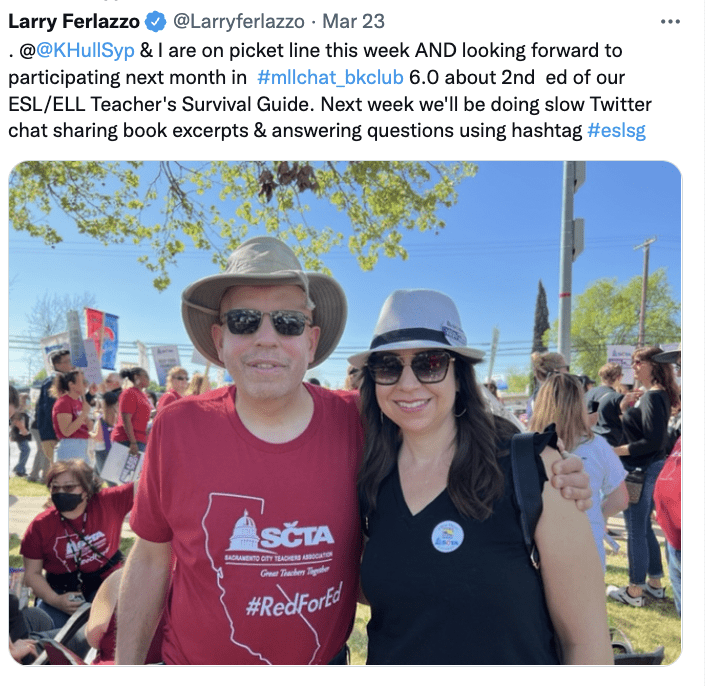
Larry and Katie had agreed to the interview a few months before we actually sat down to record.  As the days grew closer, tensions in Sacramento were mounting for educators.  The teachers in Sacramento City Unified School District were at odds with the district over a crisis and other issues.  You can read more about that here.

I was concerned for both of these Sacramento teachers and not sure how this interview would go given all they were dealing with.  But as it turns out, we had a great conversation full of reflection and sharing and even several moments of laughter.  The interview begins with what they are both doing now (day-to-day routines) and our acknowledgment of the incredibly difficult times educators are facing.

By the end of the interview, we are all reflecting on HOW an educator is supposed to be able to move forward in these challenging times.  They both offer advice about giving yourself grace and looking forward with hope.

I find this so important.  Now, more than ever.  We are at a time when so many teachers are leaving the profession.  New teachers, new teacher-leaders need a guide like this.

And they need the HOPE that Larry & Katie spoke about.  WHY are they still motivated to stay in the classroom??  Despite all the challenges they are facing this year?  I reflected on what Larry (and several researchers) tell us about motivation.  And then I could see the direct connections to how we are all connected and learning this year:

  • Relevance:  Our conversation in this interview, our collaborations on Twitter/Facebook are relevant because we all teach the MLLs and we are passionate about it.  If you are still reading, it is relevant for you too!
  • Relatedness: Katie mentioned that she is surrounded by other educators and they help each other.  This relatedness piece is about relationships.  Our PLN is about relationships.
  • Competence: THIS BOOK, the free downloads, the free book study all of it is helping us build a sense of competence.  They talked about how they themselves use the book for their own learning and growth.
  • Autonomy: Larry and Katie are champions of self-directed learning.  All that they share for free and their constant interaction with our PLN offers all of us SO MUCH choice in how we learn.  They are obviously capitalizing on choice in their own learning as well.

I find these parallels so important.  What we want for our students who are going through hard times, is the same thing that keeps US going through hard times.  That was a good take-away for me.

Thanks for tuning in!

My very best,
Carol

BAP106 Voices of Newcomers ft Dr. Denise Furlong

I had the pleasure of interviewing author and educator, Dr. Denise Furlong.  What a treat to talk with such a passionate advocate.  Scroll down to see the resources she is sharing to help you serve Newcomer students.

You can listen to the show in your favorite podcast app or right here:

Listen to “BAP106 Voices of Newcomers ft. Dr. Denise Furlong” on Spreaker.

I have been following Denise for years and I appreciate her passion for supporting newcomers.  She is a teacher educator currently serving in what she calls her dream job at Georgian Court University in New Jersey.  In addition to her work at the university, Denise offers professional development and consulting through Furlong Educational Consulting.  She is very active on Twitter where I have been following her for years.  Denise came on to share some tips for serving Newcomers and also to share about her new book, Voices of Newcomers; Experiences of Multilingual Learners. 

I had many takeaways from this conversation.  Denise is one of the people you want in your PLN to remind you that our newcomers and #SLIFE students can do SO much if we create the right conditions.  As you can tell if you listen to this episode, Dr. Furlong and I are very like-minded. We talk about keeping an asset lens for all students and we also offer ideas for inclusion in language arts classrooms.  She talks about how the students don’t need to read word-for-word to be engaged meaningfully in text (thank you!).  When we spoke about writing, you can hear the passion in Dr. Furlong’s tone.  A favorite quote is “…they may be at the word level, it might be at the paragraph or the drawing level… but whatever they are producing, it is VALUABLE.”  This is so true!  She says that anything they are producing is a representation of their voice.  That is the lens we need as we include students WHILE they are gaining literacy and language.

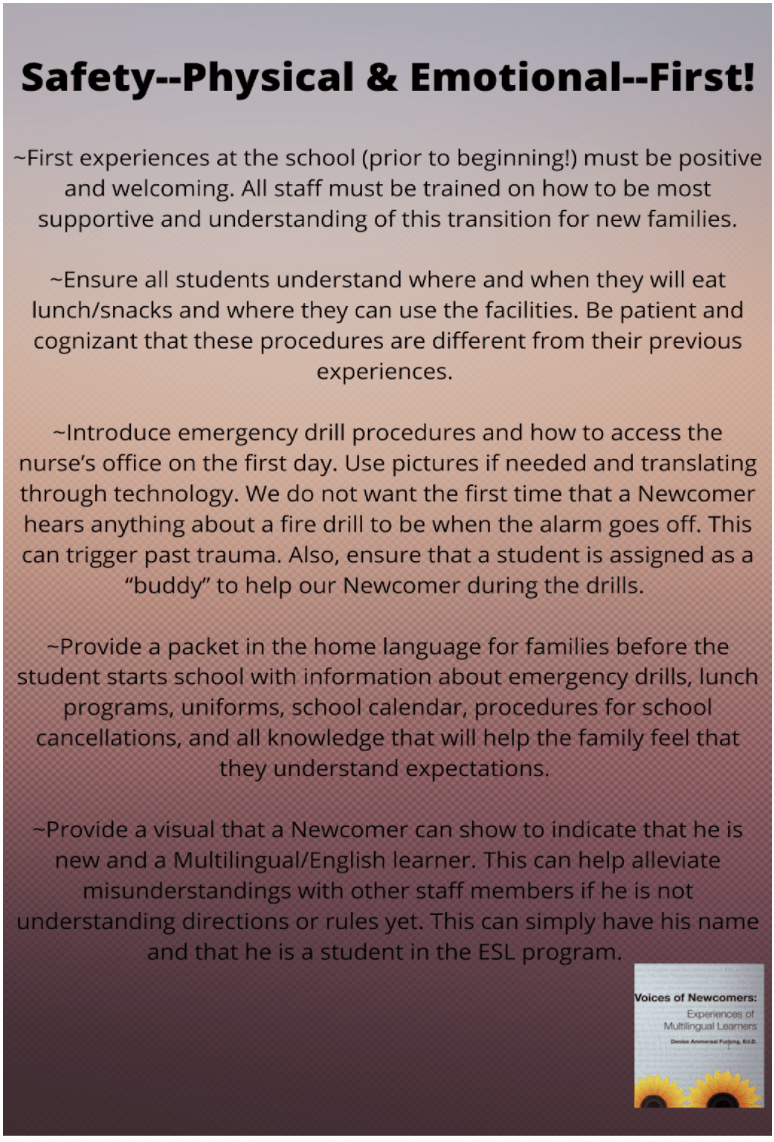
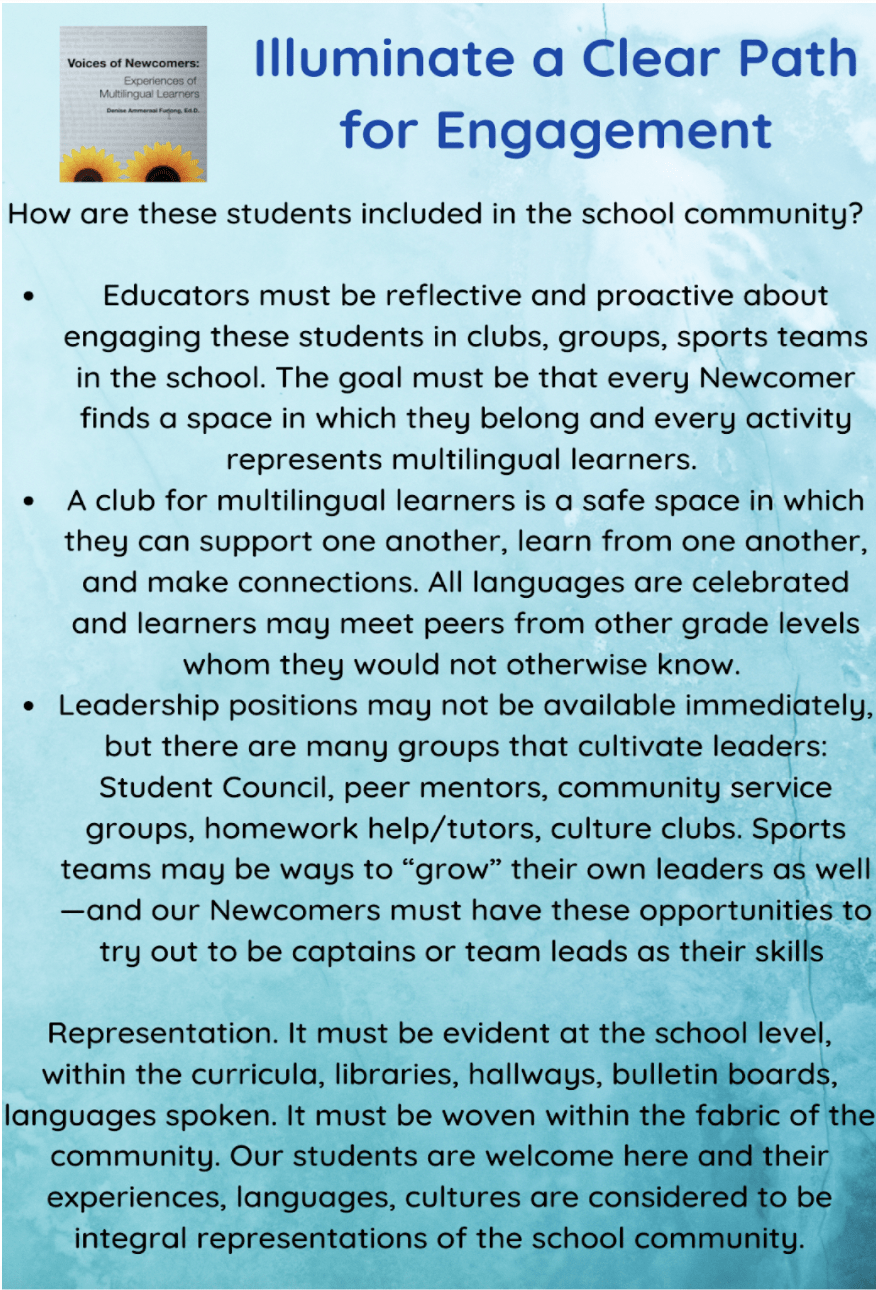
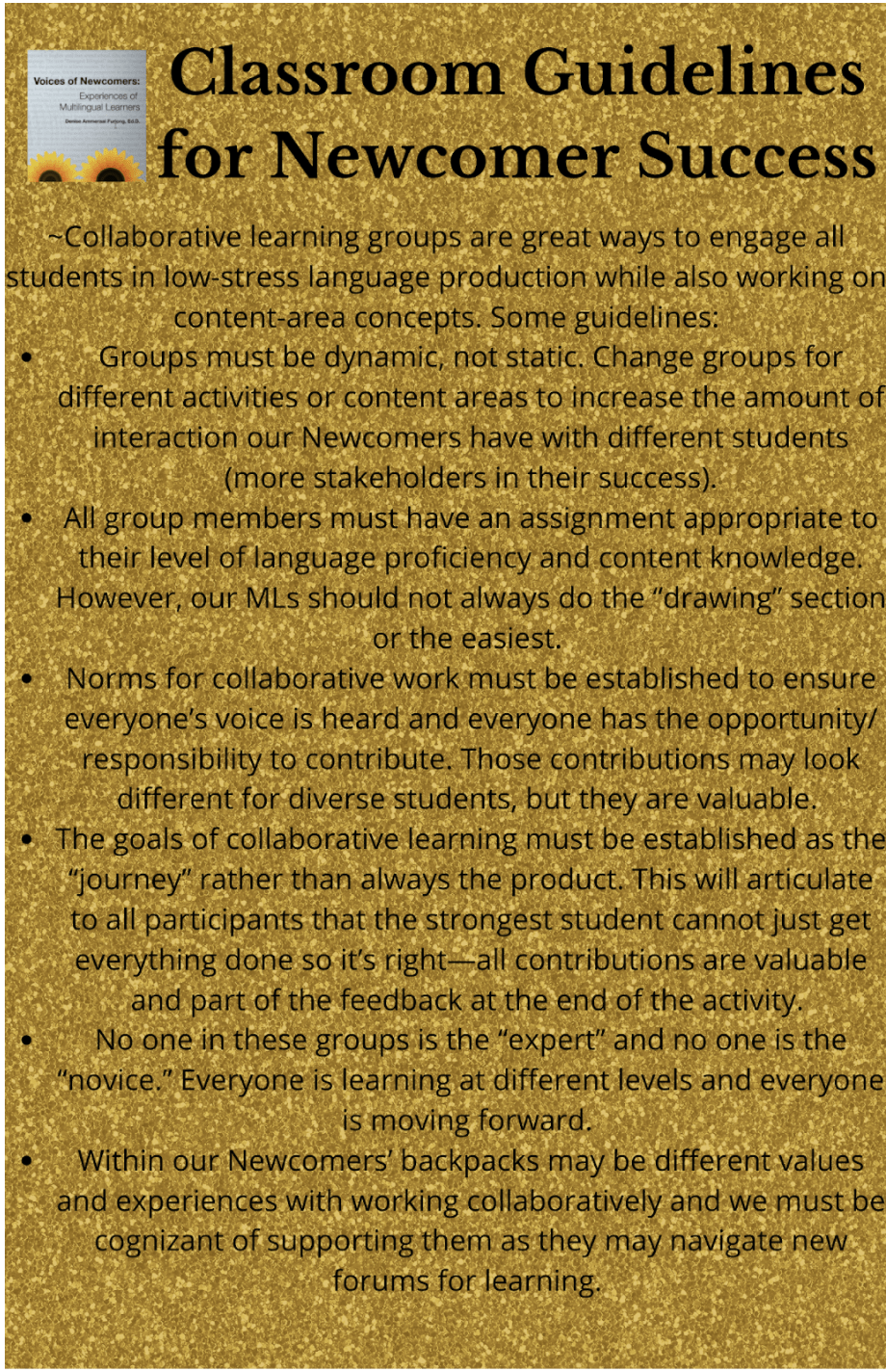
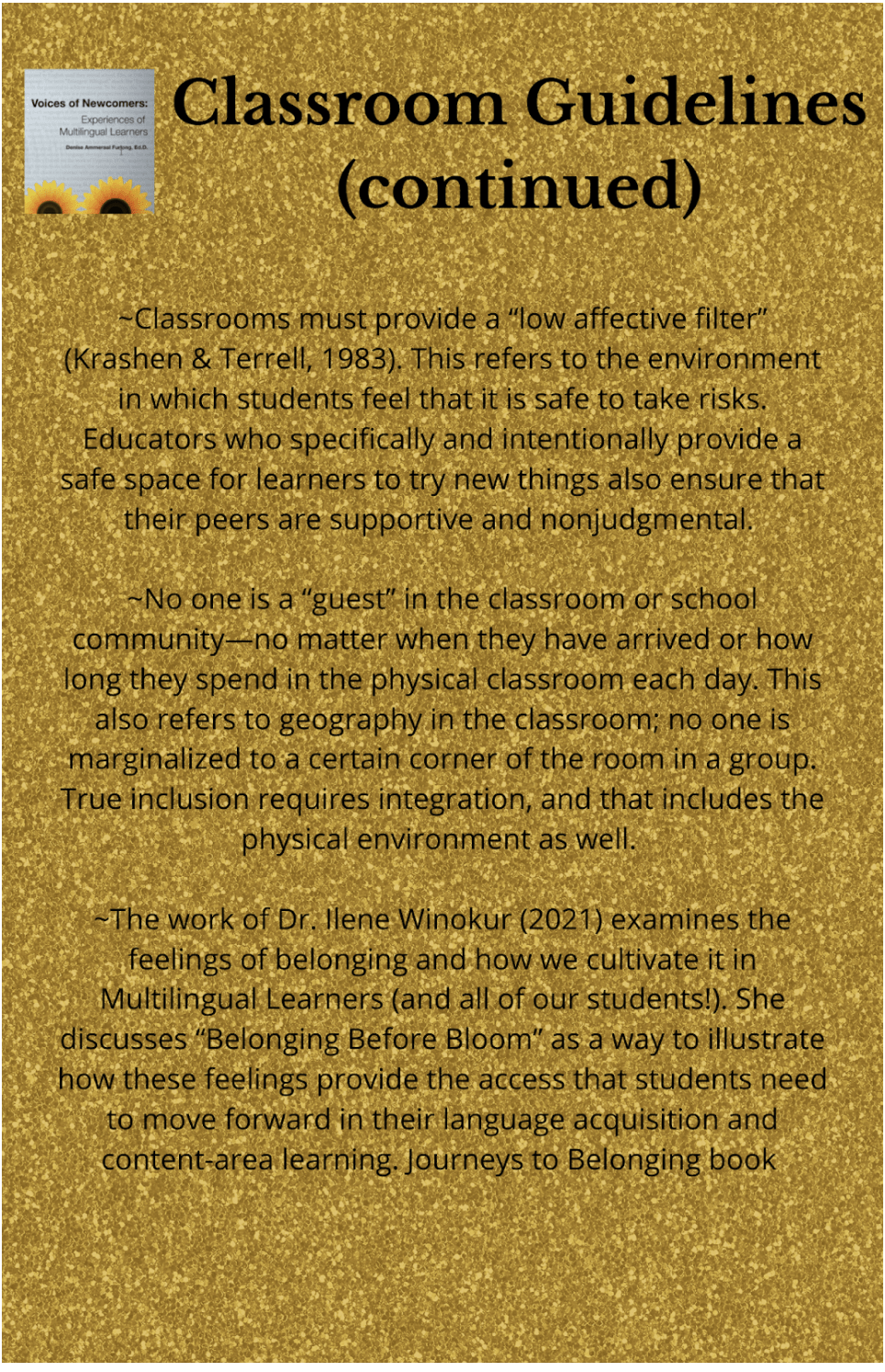
The following was sent to me by Dr. Furlong for readers/listeners to be able to use immediately.  You can also access the following graphics and information in a Google folder right here.

Here are a few words Denise sent over to me to include in the notes:

If you would like further professional learning on MLs, my book is Voices of Newcomers: Experiences of Multilingual Learners: https://amzn.to/321ilqi

Link to Dr. Winokur’s book: https://journeys2belonging.com/3C5Ojig

If you prefer a signed copy, you can email me at drdenisemfurlong@gmail.com. Mention that you listened to Dr. Salva’s podcast and I will give you a 20% discount.

If you would like to start a book club in your district, there are bulk discounts on books available through EduMatch Publishing: https://bit.ly/3If2HY9  I can set up a Zoom meeting with your book club at the end to discuss your findings and questions if you are interested.

Link to Georgian Court University, Lakewood, NJ: https://georgian.edu/academics/graduate-programs/education/ We have many graduate programs that are entirely online with access to caring, knowledgeable professors who work in the field. If you and your colleagues are interested in setting up a cohort of ten or more adding ESL or Reading Specialist endorsements to your current teaching certs, we can talk!

Thank you for all you do to meet the diverse needs of all your learners! We all need you to elevate your voices and your advocacies for our students. 

-Dr. Denise Furlong

In this show, I also mentioned Pam Broussard and her Leading ELLs Facebook group.  Pam is a fierce advocate for moving students into positions of leadership.  I hope to have Pam on the show soon!  Check out her website.

I want to say another big thanks to Dr. Denise Furlong.  How fabulous that she is offering a discount to readers and listeners of this show!?  Dr. Furlong gives so much to the field.  I am so happy to know her and so happy she decided to write a book to amplify the voices of newcomers, their teachers, and their families.

I closed this show by mentioning a few places we can connect IRL.  Here are links to those events:

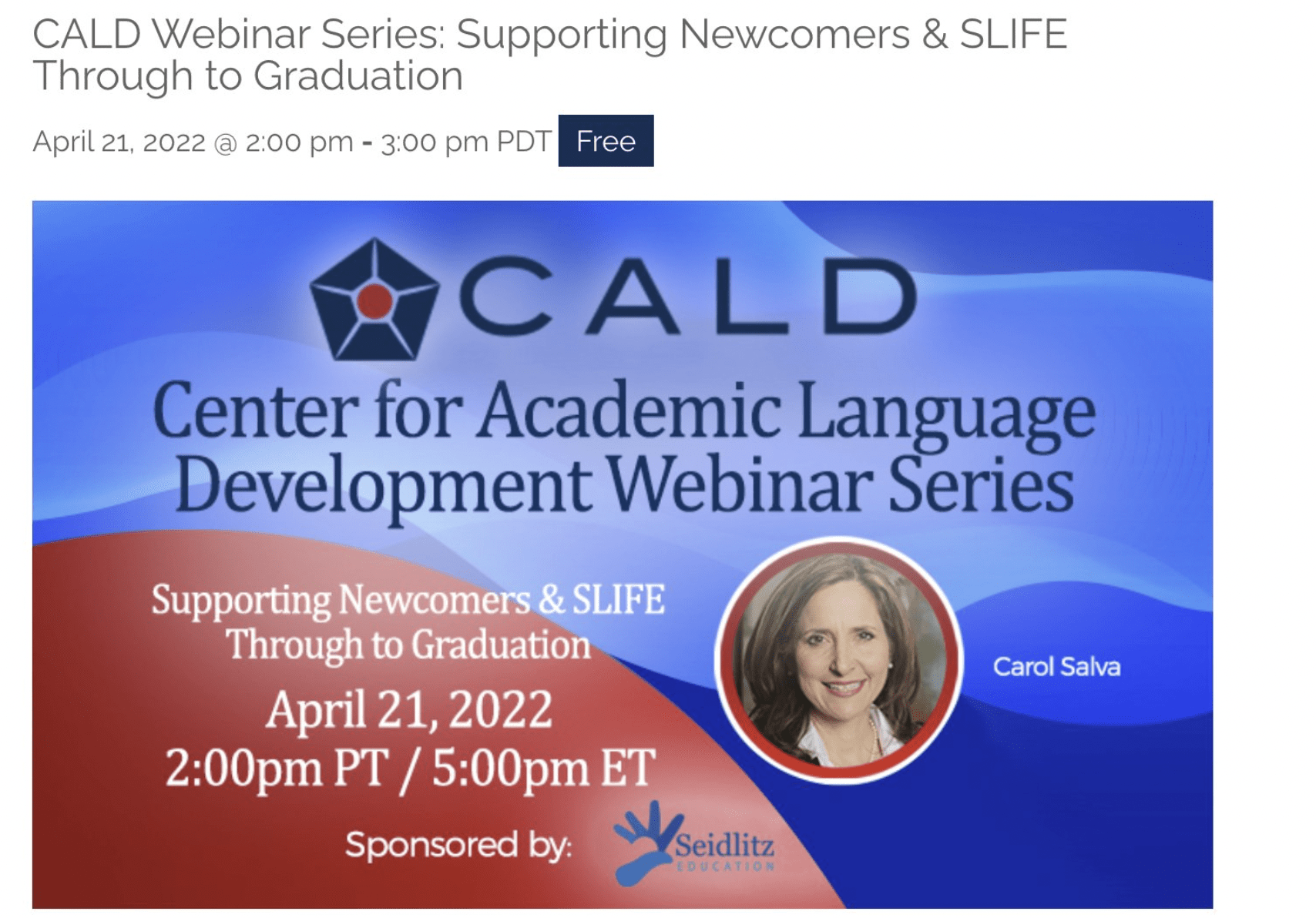
FREE EVENT on April 21:  I will be sharing some of my findings from my dissertation at this zoom event sponsored by CALD and Seidlitz Education.

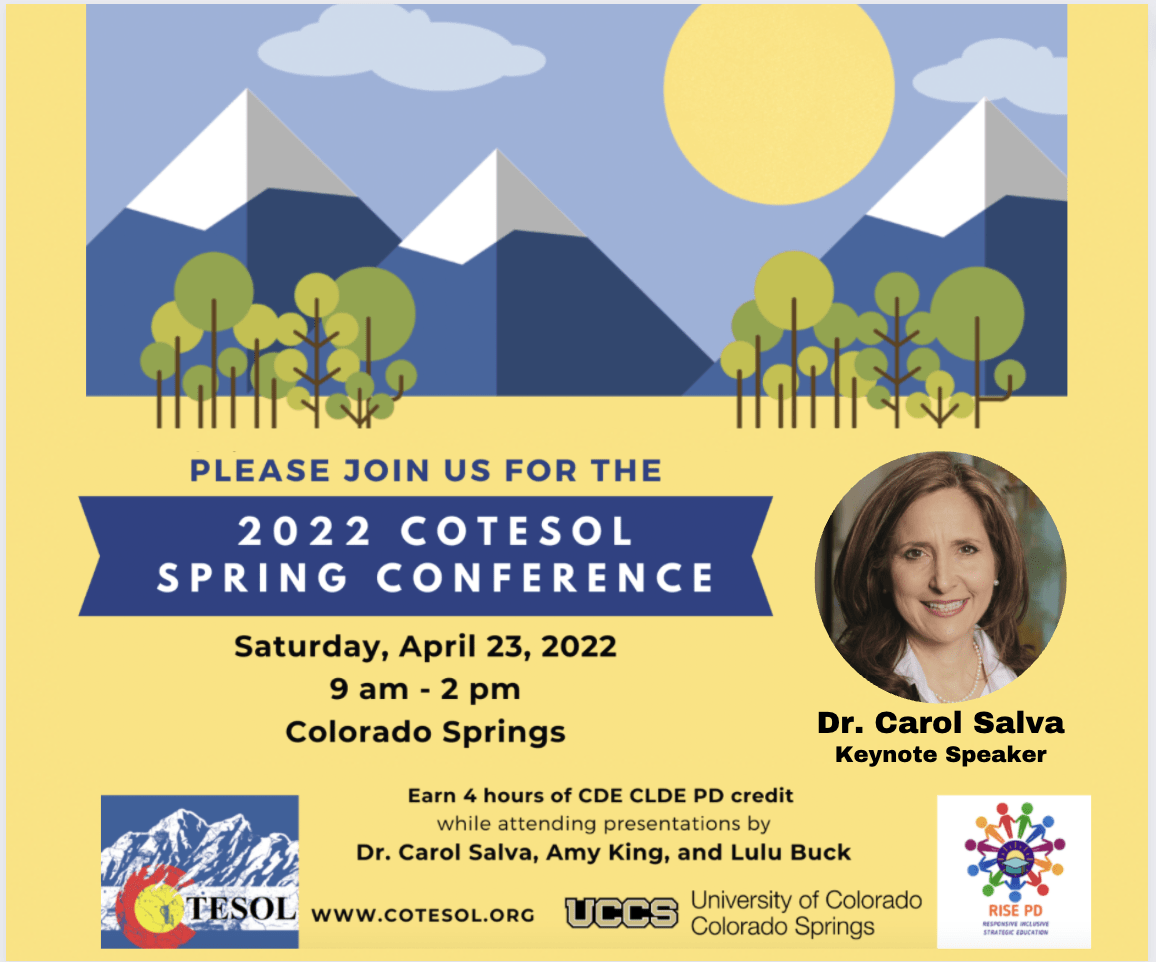
I am the keynote speaker for Colorado TESOL’s Spring Conference on April 23 in Colorado Springs.  This is a very affordable, in-person event:

Also, mark your calendar for November 4 & 5th.  The TEXTESOL conference will be in Houston, Texas and I will be the keynote speaker for that one.  Follow TEXTESOL IV for updates that will be coming soon. Come to TEXAS!  It’s going to be amazing!

Thank you again to Dr. Furlong and as always, thank YOU for listening or reading or both.  You’re going above and beyond here.  And you are really helping my learning.

Take care,

Carol


BAP105 Ambassadors and Leadership ft. Margaret Rutaquio

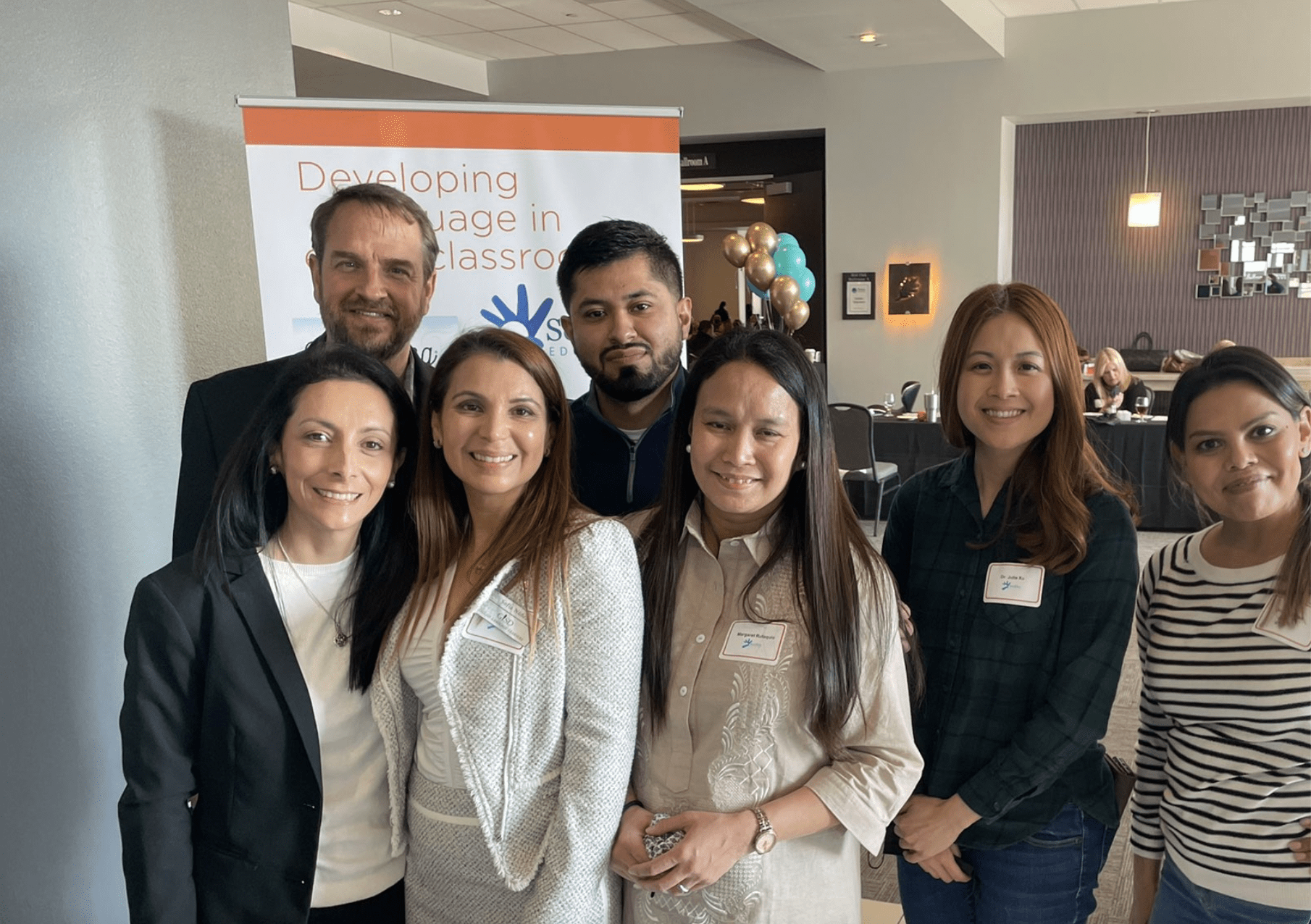
If you want to make a difference for all the newcomers enrolling in your schools, I have a great show for you with lots of free resources.  Our guest is Margaret Gisala Rutaquio, a Multilingual Programs Newcomer Facilitator from Garland ISD.

You can listen to the show in your favorite podcast app or you can play it right here:
Listen to “BAP105 Ambassadors and Newcomer Leadership ft Margaret Rutaquio” on Spreaker.

Margaret Rutaquio is a national speaker with classroom and district-level experience supporting newcomers and their teachers.  Earlier this year, she presented at our Seidlitz Education What’s Working conference and was also an invited speaker at the Inlier learning SLIFE conference.

She shares some great insight about how she was supported by Deb Tietjen and the Multilingual Department in Garland ISD.  She also talks about ideas from her classroom and also about how she was supported work with her district to improve programs for newcomers.

A powerful part of this interview was when Rutaquio shares her own journey as a newcomer to the United States and how she felt that she was a “cultural survivor.” Her reflections offer us so much to think about.

The second half of the show includes details about the Ambassador program Margaret and her colleagues implemented across the Garland ISD school district.  It is such an impressive program!  She explains how they name an individual at each campus to be the official ambassador for new students.  She also shares ideas for programming and templates for implementation that support Newcomers to ensure that they feel a sense of belonging and have someone to support them in their first experiences.

Margaret mentions Dr. Michelle Yzquierdo who is an amazing educational consultant.  I have learned so much from Dr. Yzquierdo.  Margaret adapted some of her intake materials from Michelle’s book, Pathways to Greatness. 

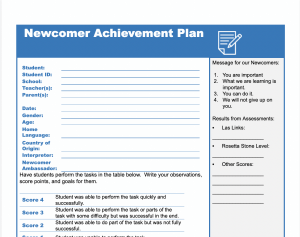
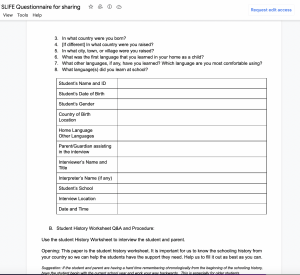
Rutaquio generously shares these two documents for districts to use in their own intake processes.

Newcomer Achievement Plan Interview Document

Margaret spoke about her students’ blogging and how this was featured in Dr. Lora Beth Escalante’s book: Motivating ELLs
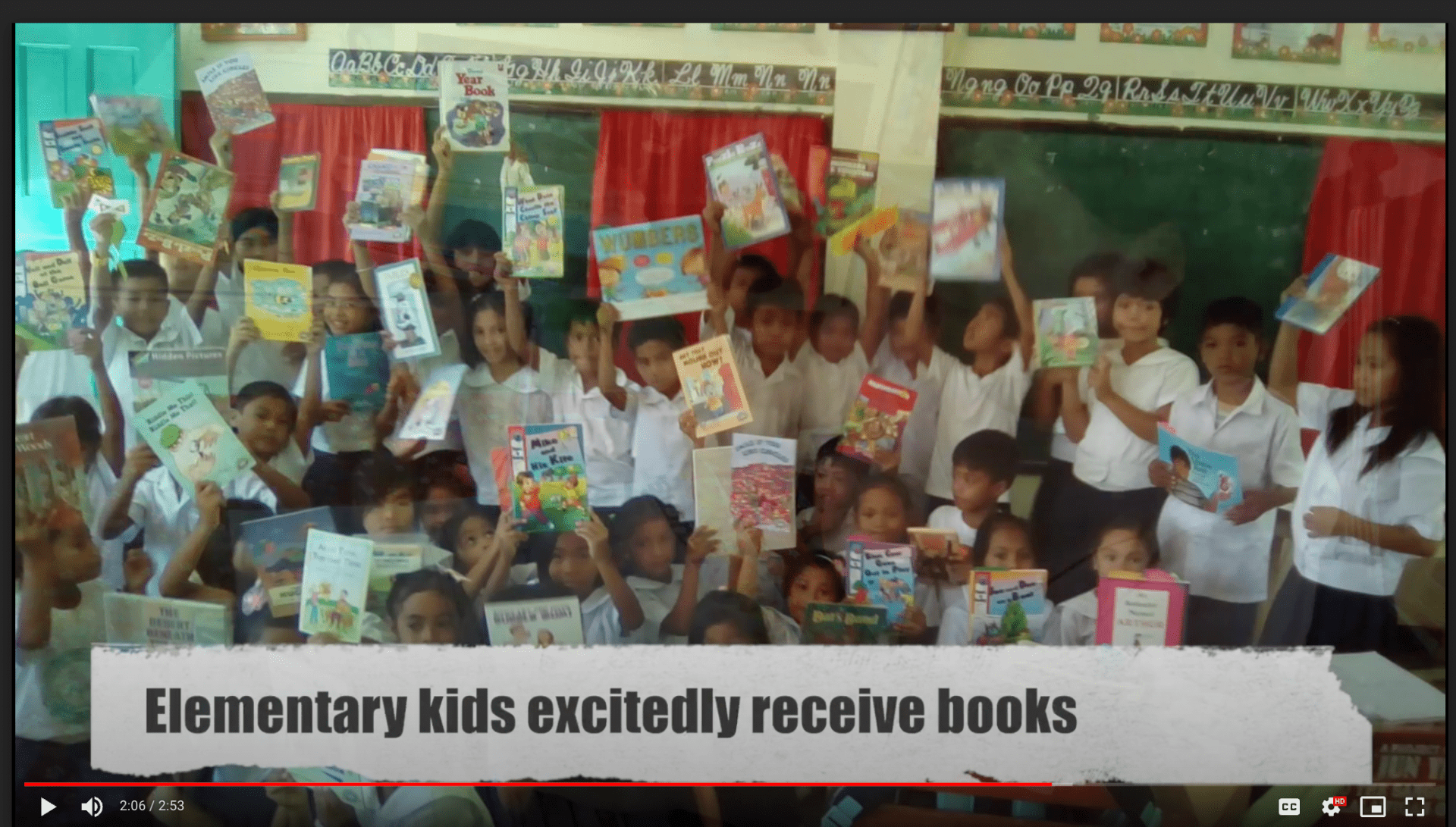
She also mentioned a project of sending books to impoverished schools and has offered this video that shows the “Journey of the Box” of books.

The Journey of the Box – EL Leadership Students of South Garland HS sent boxes of books to schools needing support in poor areas in the Philippines (This video was put together with Margaret by her student Mauricio Rosales, a former Newcomer student.

How can you mean these four essential messages, if you don’t get to know the students?  That is a great point offered by Rutaquio.
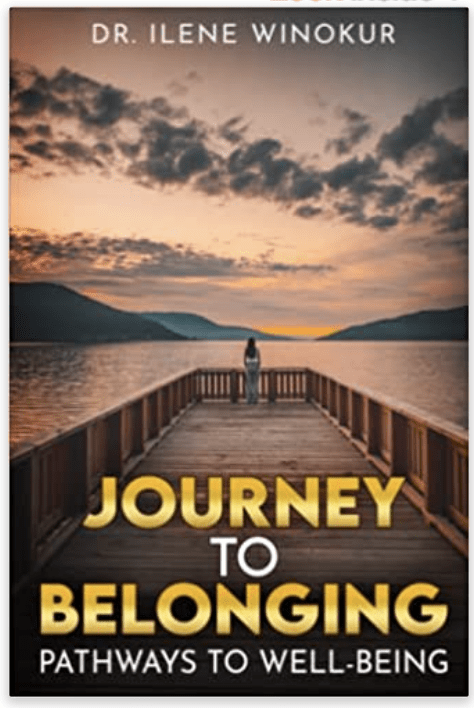
I often mention Dr. Ilene Winoker when I think about “belonging.”  I have learned a great deal from her about the power of creating a sense of belonging.
Thank you, Margaret Rutaquio for all you are doing in the field!

I appreciate Margaret so much.  I also appreciate YOU.  Thank you for checking out this show.  Please reach out with feedback or if I can help you.

hugs,
Carol

BAP104 Leadership and Change ft. Derek Rhodenizer

Many thanks to Derek Rhodenizer for pushing our thinking once again.

We talk about so many things in this interview with one of my favorite education leaders!  If you’re not following Derek, stop reading this and go follow him right now.  I’ve been following Derek for years and doing so is one of the best things I can do for my own self-directed professional learning.  You can listen to the show in your favorite podcast app or right here:

Listen to “BAP104 Leadership and Change ft. Derek Rhodenizer” on Spreaker.

We talk about so many things in this episode that can support teachers of Multilingual Learners.  And because of where Derek is in his career, it helps us look at our learning through the eyes of an education leader.   He has always done that for me.  But now is an especially interesting time because Derek is making a big move from his independent/private school to a public school in Ottawa.

His thinking around this is great for my mindset.  We reflect on why we make moves like this, on some of the things that are important to keep in mind as you leave a position of leadership and how we might all be thinking to best support students and our colleagues in these challenging times.

He has so many “Mic-Drop” moments in this show.  One of them is when he is talking about leaders needing to know when to move aside for others to step into leadership.  Also when he talked about how we need to put our roles into perspective.  We are not the ONLY person that can be a leader in any school, team or group.  This is an interesting image that he shared with us those lines:

We laughed about that visual.  But we also talked about the power in it.  Sure, you could take this image and feel like your impact is small.

But we would rather look at this in terms of how important it is to take new risks.  It is okay if we make mistakes.  We are having an impact on those we serve but if there are mistakes in that effort, the world continues to spin.  And we can move forward from it having learned something.

Derek is looking at this image to help him put his role into perspective as he leaves a school where he has been for 6 years.  While I recently learned that every student drew a picture of him and staff recorded sentimental messages to him.  He certainly had an impact!  But others can also have an impact on that space.  The world is big enough for that.

That was one of my major take-aways from this conversation. The fact that we can all go forth boldly and with vulnerability so that we can realize that it will be okay if we make some mistakes.  I am asked to model strategies in front of teachers all the time.  I can do that because I know it doesn’t need to be perfect.  My willingness to take risks will help me try things with educators and give them opportunities to reflect.  That is where I feel we can have the biggest impact as instructional leaders.  Helping everyone grow as we partner with them.

Derek and I mentioned several other things and here are the links to those:

MADpd:  The free and amazing conference created by Derek & Peter Cameron.

Here are a few specific MADpd resources from Emily Francis, Jennifer Hunter Dillon and me that might be of interest if you teach Multilingual Learners.  Click on the image to see more about our presentations:


A few other things we mentioned were:

“Positive” doesn’t necessarily mean “happy.”  Positive is having hope that things will get better.

We reflected on this show about having ONE Newcomer arrive in a mainstream class in the middle of the school year (it is an old show but someone JUST tweeted about it).

Another FREE PD I highly recommend is the MLSummit.  Tan Huynh, Dr. Katie Toppel, and I put this conference on each summer after taking a page from MADpd.  You’ll find so many free sessions for teachers of MLs at that link!

So don’t forget some of Derek’s advice:

Teachers feel like they are on the last kilometers of a marathon right now.  Let’s not pretend we are supporting if all we are doing is giving them “encouraging” words.  Try not to  pay lip service by only saying things like “take care of yourself.”   Derek recommends calling things what they are and then looking for ways to actually lighten their load or other means of support. 

In other words, figure out how to be more straight-shooting.  That is more respected.

And please remember that we would love to have you at the DIYpd4MLs workshop on March 3rd & 4th.  This one does have a fee but we are getting great feedback on the workshop!

Thanks for stopping by this blog.  I appreciate all you’re doing and I appreciate you supporting my learning journey.  Please reach out and let me know if you found something useful here.

Be well,

Carol


Lessons & a Boost for you! MLK to Valentine’s Day Unit for Jan to Feb

I hope this finds you healthy and with hope for positive outcomes this week.

If you know ANY Newcomer teachers, please share the following podcast episode with them.  I always get TONS of thanks like this when I share these lessons for the Newcomer classroom.  They are ideal for January – February.  They focus on Kindness & History but the main goal is to engage our students and accelerate their language acquisition and build their self-esteem as learners.

CLICK HERE for the episode:

Thanks for all you’re doing!

Carol

BAP103 Motivation and Engagement for SLIFE

Motivation is everything.  If we don’t have engagement, what do we really have?  We might have fake readers & students who are doing the bare minimum.  But how would their learning change if they were engaged and intrinsically motivated to learn even when they are not with you?

I’m working around the US and Canada training, coaching, and modeling.  I’m seeing some amazing things for new arrival students.  This podcast is in response to feedback I’m getting from newcomer teachers I support.  MANY are telling me:

“I’m struggling with engagement.”

Well, we have solutions!  You listen to this show right here or in your favorite podcast app:

Listen to “BAP103 Motivation & Engagement for SLIFE” on Spreaker.

You may prefer to watch this show on YouTube or right here:

And you can always just read through the notes below.

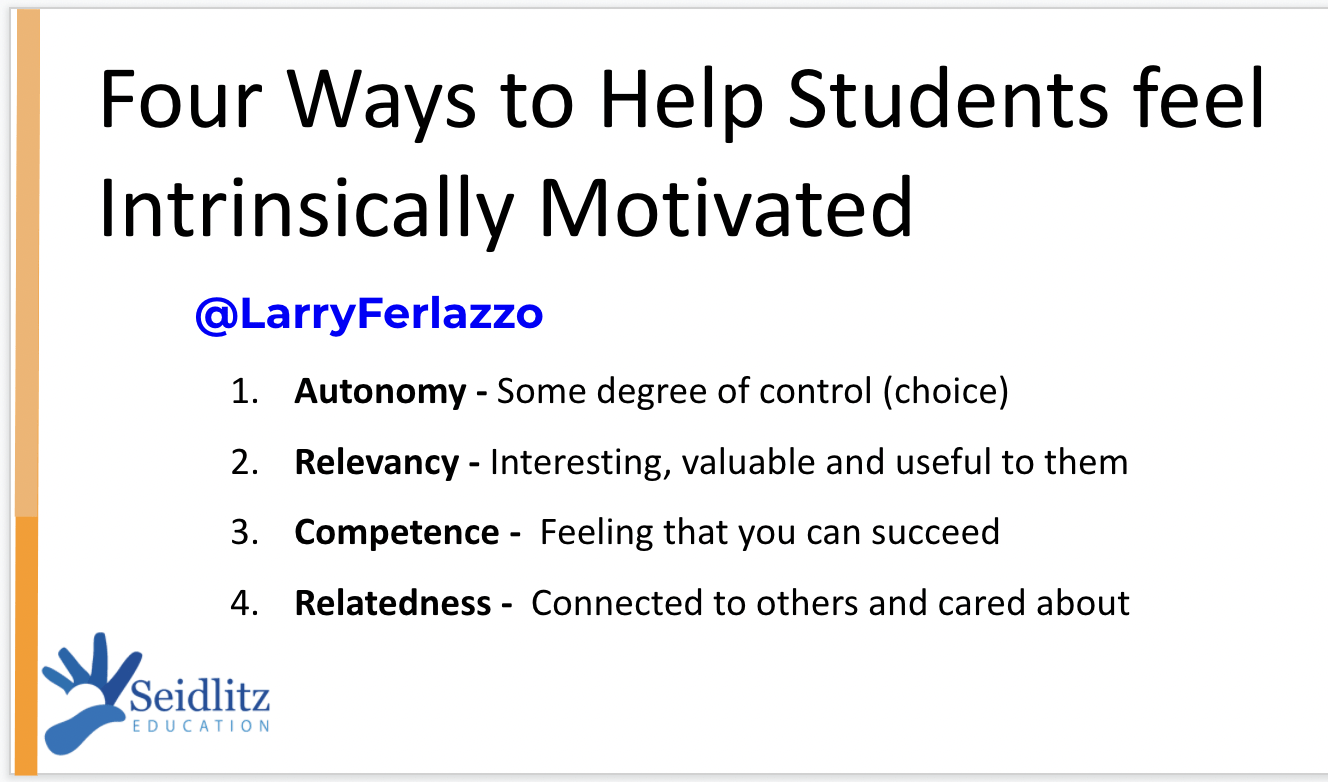
In this episode, I am standing on the shoulders of Dr. Lora Beth Escalante, who wrote “Motivating ELLs,” Researchers like Daniel Pink, and also the work of Larry Ferlazzo who is a practitioner, blogger, and author of many books on the subject. In fact, I’m following 4 things recommended by Larry Ferlazzo in this article.

Larry has shared this in more than one article.  Check out more of his articles, books, and posts here.  In the podcast, I mention the good news and the bad news about motivation.   The bad news is that we can’t MAKE students be motivated.  The great news is, just as Sir Ken Robinson tells us, we can create conditions where things should grow.

And we know what we need in our “garden” for optimal motivation conditions.

According to Ferlazzo, these are the 4 things that help students become intrinsically motivated:

  • Relatedness

  • Relevancy

  • Competence

  • Autonomy

In the show, I talk about each of these things and how we can foster them for multilingual learners.  While this applies to all students, I am always specifically speaking to the teacher of SLIFE (Students with Limited or Interrupted Formal Education).  Here are some of the things I mentioned for each:

Relatedness

Relationships!  Does my teacher respect me?  Do the other students respect me?  How do we get along?  How do I feel as a person?  Is my culture appreciated?

Here is a show on creating a social contract if you feel that your classroom needs a reboot on how we treat each other.

Also, don’t underestimate how volunteers can support a sense of relatedness.  Don’t have volunteers, ask your principal or PTA to send out this video to the community:

Relevancy

Ask yourself if students understand WHY you’re asking them to do _______.  Whatever you want them to do, do they see the relevance for them and their lives?  As an example, I want students’ eyes to go across text when things are read aloud to them.  I need to explain to them why that is.  For example:

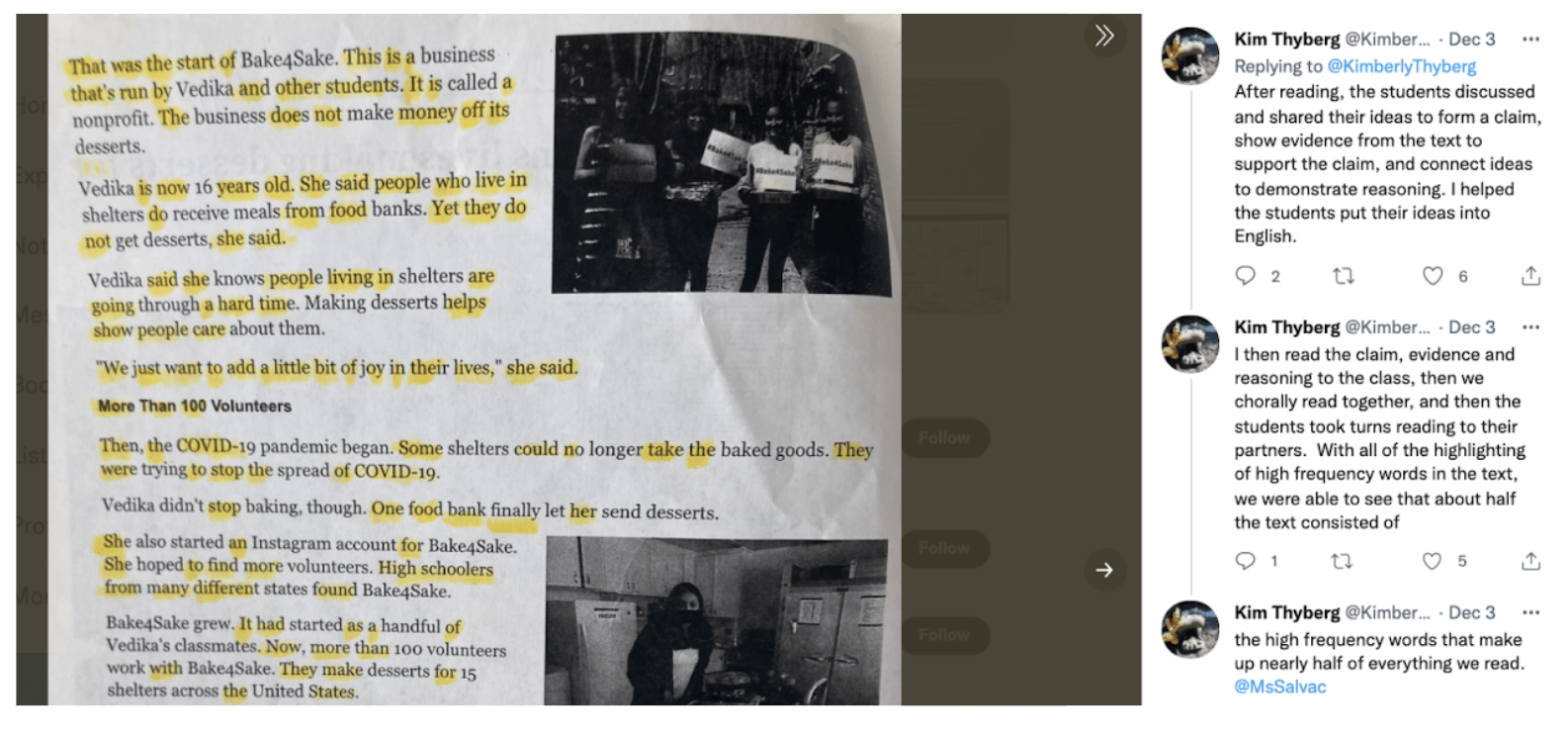
If I am reading aloud to emergent readers, I want them to track the print with their fingers when they are first gaining the language.  I want them to understand that if they track the print with their eyes 👀, they will see high-frequency words over and over again.  This will support their decoding skills in a powerful way.  They need to understand that 1/2 of all print is high-frequency words and gaining them will impact their language and literacy development dramatically.  They need to read WITH me.  We can absolutely chunk the text and help them negotiate meaning and be analytical about the text.  But as emergent readers, they need to track the print to get more high-frequency words.  This is the WHY.

Here is another example of relevancy from Kim Thyberg on Twitter:

I love how Kim is teaching grade-level concepts (claims/evidence/reasoning) but also helping her students understand how quickly they can begin to decode text as they gain these high-frequency words.

Competence

If I have a sense of competence, it means that I feel myself getting better at this activity.  Before we think our kids lack grit and give up too easily, let’s remember that these same students will fail over and over again at video games.  Why?  Perhaps because they’ve had a little win at that level.  They feel that they can figure out the level.. that they can master it.  They don’t have mastery YET, but they are improving.

We can also think about ourselves and something we are trying to learn to do.  Perhaps you want to bake your grandmother’s cookie recipe.  The first time t

hey don’t look very good but they taste pretty close.  So you try again.  You try again because the small successes in your attempts give you a sense of competence.  You feel that you can master it because you had some small wins.

When we think of our students who are not engaged or motivated… let’s think back to the last time they had an academic win.

There are many ways to give SLIFE little wins.  Examples include:

Showing them growth every time we speak to them.  Using any book and asking them to identify words or sounds of letters and pointing out any growth.  I tried to do this every time I had them in a small group.

QSSSA is also a great strategy that gives your entire class an opportunity to have a win.  See Ep 26 for more on QSSSA.

Autonomy

Autonomy means choice.  We have seen many teachers sharing choice boards lately and as you can imagine, this leads to more engagement from learners.  All of us want some choice in what we do.  So perhaps we offer choices in how they participate in a task.  ie: with a buddy, on their own, with the teacher:

We can also offer choice in how they reflect on what they read:

But one of the most important places they need autonomy is in WHAT they read during free voluntary reading time.  We only had a few minutes a day to read for pleasure.  But I was always emphasizing that they needed to read on their own whenever they could.  For this to happen, they need LOTS of things to choose from.  If you chose to read something, because it is of interest to YOU, you’re less likely to fake read or abandon the text.  Stephen Krashen tells us that free voluntary reading is key to language acquisition.  And YES, our SLIFE can read… with support!

What can SLIFE, who have low to no literacy in their first language read? A lot!

There are many things they can choose from.  Examples include:

  • Re-reading things we wrote in class together for fluency. Explain why this will boost their ability to decode text.
  • A book they chose from the library or your classroom. We can show them how to negotiate meaning from any piece of text with technology (Google Images, Google Translate, Chrome Read Aloud Extensions)
  • Ergo-Hi-Lo Ebooks  These are high-interest, easy-to-read books that you can print or have e-versions.
  • If you have the budget, get a library of Saddleback Hi-Lo readers! Saddleback books are my favorite Hi-Low readers if you have the budget for materials.
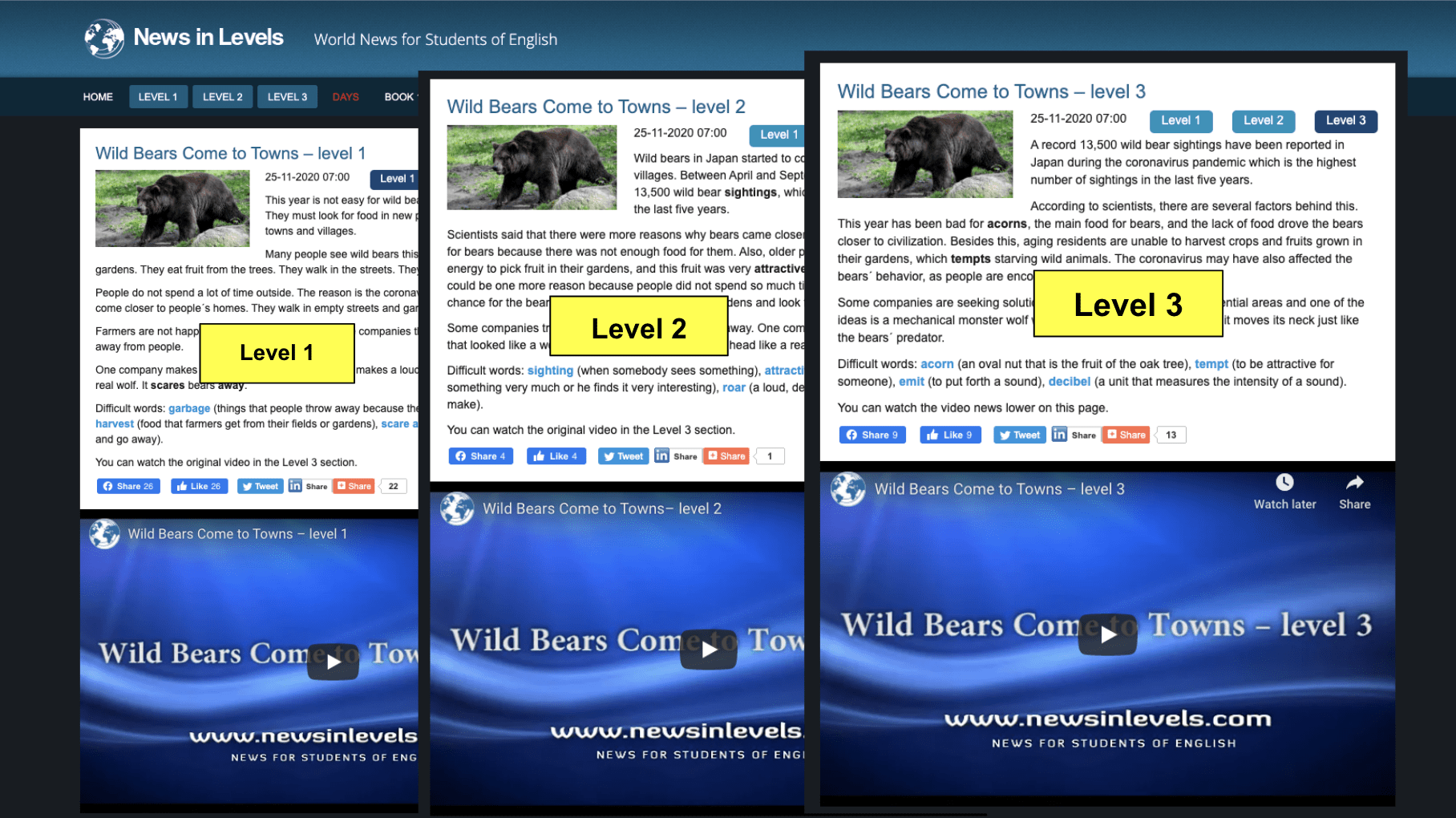
  • A top tip is  www.newsinlevels.com.  I did a show about it here.  That free website is so important once the students understand how to level up within the same article.

Two Examples of Highly Engaging Activities that Boost Literacy & Language Acquisition

🌟NEWS IN LEVELS🌟

News in Levels offers so much choice.  This is not a little bit of choice… it is a TON of choice. It requires no login and they can choose from current or hundreds of prior articles.  Here is how it relates to what we are talking about today:

  • Relatedness:  I will conference with new students and show them how to use it. I have faith in them that they can quickly learn the skills to make this meaningful.  They can do it with a buddy or me or as a whole class for the first few times.  I want to know their interests so I ask about what they are choosing to read about… RELATIONSHIPS & HOW WE REGARD THEM.
  • Relevancy:  The link I am giving you explains to you and to the students HOW to use it and WHY it works for older emergent readers. I even made a quick 5 min video to show students how to use the site.  THIS OFFERS RELEVANCY for using this site and because they chose what they read about, and it is the actual news, it is by nature relevant to them.
  • Competence: If they follow my advice, they will go through all three levels of an article before they move on to a different new story.  They should be able to master level 1 with support (it is read aloud to them from YouTube, it includes images, they can use Google images & Google translate as well… they can even get support from others).  When they go to level 2 & level 3 it is just about exposure to more complex language.  They feel themselves getting better with word recognition the more they do of this.  It offers an opportunity to level up, small wins, A SENSE OF COMPETENCE.
  • Autonomy:  As I mentioned above… this site offers a great deal of choice.  The students need to have the autonomy to choose what they read and this site offers hundreds of articles.

CHOICE PROJECTS 

I follow Noa Daniel and her Building Outside the Blocks philosophy has made a huge difference in my classroom.

  • Relatedness:  I model a choice project presentation.  Students learn about me and get the message that I want to learn about them.  All students learn about each other and throughout the year we are learning about each other and reinforcing appreciation for our diversity.  Choice projects offer voice. RELATIONSHIPS
  • Relevancy:  Students choose what to present about. They are RELEVANT by nature.
  • Competence: They practice, practice, practice what they will say.  They read & re-read & re-read their scripts for their presentation and what they turn in.  We can point out their progress in identifying and recognizing English words and sounds. This leads to a SENSE OF COMPETENCE.
  • Autonomy:  Students choose what they want to present about and they choose a day during the grading period that they want to present. There are many opportunities for autonomy.

Here is a video of a newcomer presenting her Personal Playlist project.  More projects with resources can be found here also check out Noa’s site.

I hope this has been helpful.  Shout out to all the teachers who are collaborating with me this year. I love all I learn with them!

Please take good care!

❤️, Carol

PS:  Here are resources including a free chapter download for DIYpd4MLs book:

Other resources I used for this show:


BAP102 Journeys to Belonging ft Dr. Ilene Winokur

This show should be relevant to all educators.  The book “Journeys to Belonging” by Dr. Ilene Winokur is now out and available.  This show includes research and practical ideas for supporting ALL students including marginalized learners.

You can listen to this episode right here or in your favorite podcast app:
Listen to “BAP102 Journeys to Belonging ft Dr. Ilene Winokur” on Spreaker.

Dr. Winokur has led a fascinating life and was on our show earlier this year. You can listen to that episode right here.  She is someone I have followed for years.  I appreciate all I learn from her and I’m grateful to have cited her in my doctoral research regarding what has an impact on the persistence of marginalized students.

Journey to Belonging

The hashtag is #Journeys2Belonging.  Check that out to learn so much about Ilene’s book and her work. She joined me and Stephen Hurley of VoicEd radio for this live show in September and you can now get your copy of this book on Amazon or through Edumatch Publishing.


She discusses her own journey, the research behind a sense of belonging, and how important it is for educators to set the tone of safety in our learning spaces.  You can learn so much by following Dr. Winokur on Twitter or on her website.

She also has her own great podcast and you can get links to all of that from the website.

Neuroscience and Psychological Safety

Ilene mentions a show with Stephen Hurley and Dr. Stephen Porges.  The body’s physiological response and need for safety is discussed in depth in that show.  Ilene references Dr. Porges more than once so here is that show for your continued exploration of the subject.

I am always fascinated to here Ilene’s thoughts about how we can create a safe space where everyone feels welcome.  We talk about what is practical and how we can support the emotional needs of our students and of our teachers.

I’m so grateful to Dr. Winokur for writing this book, for spending time with us, and for all she shares regularly.

Thank you so much for tuning in to this episode. You add so much to my journey!

Please connect with me on Twitter or Facebook.

Carol

PS: Our new book, DIYpd: A Guide to Self-Directed Learning for Educators of Multilingual Learners is out and you can download the first chapter right here.  We hope you’ll interact with us on Twitter for the current round of #MLLchat_BkClub.  Use the #DIYpd4MLs hashtag to engage.